AI for 3PL Customer Service: How Intelligent Agents Cut Response Times and Costs

Third-party logistics providers face growing ticket volumes from shipment delays, returns, and delivery questions. Manual processes stretch support teams thin, leading to slow replies and rising operating costs.
Common pain points include a high volume of tracking and status requests, manual follow-ups for returns and exceptions, difficulty scaling without proportional hiring, and disconnected systems that force agents to switch tools.
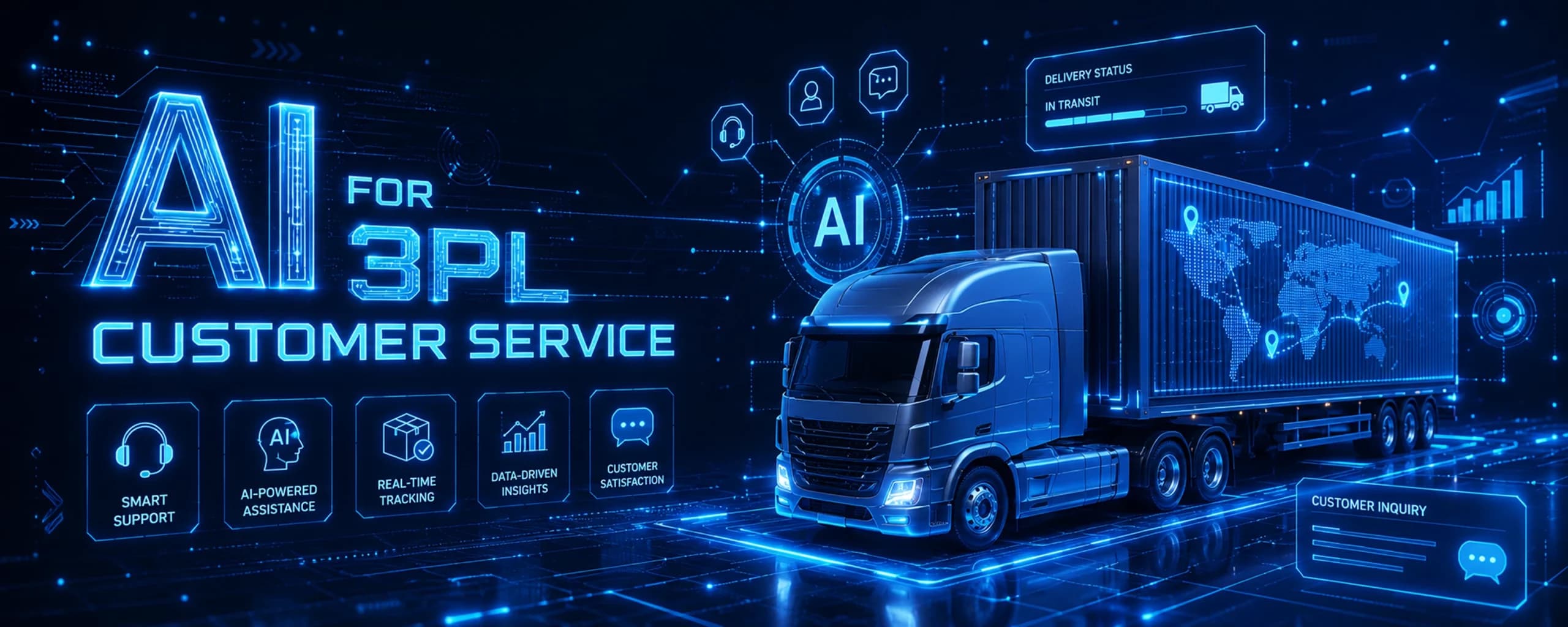
AI for 3PL customer service replaces that repetitive work with always-available agents. These systems answer questions about delivery windows, handle reroute requests, and initiate return labels without human intervention, cutting average response times by 60-80 percent while lowering support costs.
How AI for 3PL Customer Service Changes Daily Operations
Integration with transportation management systems and CRMs lets agents pull real-time data, so customers get accurate updates over chat, email, or voice instead of waiting on a follow-up ticket.
- Proactive shipment status notifications
- Returns initiation and label generation
- Exception handling for weather or carrier delays
- Basic billing and invoice inquiries
The most reliable rollouts start with the top five query types, then expand coverage once the first results come in.
Key Benefits and Expected ROI
| Benefit | Traditional Process | With AI Agents | Typical Impact |
| First response time | 4-24 hours | Under 2 minutes | 60-80% faster |
| Cost per ticket | $8-$15 | $2-$4 | 50-70% reduction |
| After-hours coverage | Limited or none | 24/7 | Higher CSAT scores |
| Scalability during peaks | Requires overtime hiring | Handles 3-5x volume | No added headcount |
Most mid-market 3PL companies see payback within 60-90 days once agents handle at least 40 percent of routine volume. Enterprise providers often see faster returns because of higher ticket counts.
Build vs. Buy for 3PL Providers
Custom development typically takes 6-12 months and requires ongoing maintenance. Pre-built platforms with customization options deliver working agents in weeks instead, while still giving the provider ownership of its data and workflows.
The decision usually comes down to a few factors: time to first live agent, integration effort with existing TMS and CRM tools, ongoing support and compliance requirements, and total cost of ownership over 24 months.
Isometrik AI is built for this route, deploying production-ready agents without the long development cycle that in-house builds require.
Realistic Implementation Timeline
Most 3PL operations complete rollout in 6-9 weeks, across four phases:
- Discovery and scoping (1-2 weeks) – map top query types and data sources.
- Integration and training (2-3 weeks) – connect systems and train agents, producing a working prototype.
- Pilot with live traffic (2 weeks) – route 20-30 percent of volume to agents and review performance.
- Full rollout and tuning (1-2 weeks) – expand coverage and refine answers for production.
Measuring Success After Launch
Track these metrics weekly during the first 90 days, and adjust agent responses based on real conversation data to keep accuracy above 90 percent.
- Ticket deflection rate
- Average handle time reduction
- Customer satisfaction scores on automated interactions
- Cost per resolved ticket
Conclusion
Rising ticket volumes and tighter service-level expectations make manual support harder to sustain for growing 3PL operations. AI for 3PL customer service closes that gap by handling the repetitive share of the workload around the clock, while routing complex cases to human specialists with full context.
For mid-market and enterprise providers, the partner model offers the fastest path to a production-ready deployment, typically live in 4-8 weeks with payback inside 90 days.
That combination of speed and measurable ROI is why more 3PL operations are choosing it over a 6-12 month in-house build.