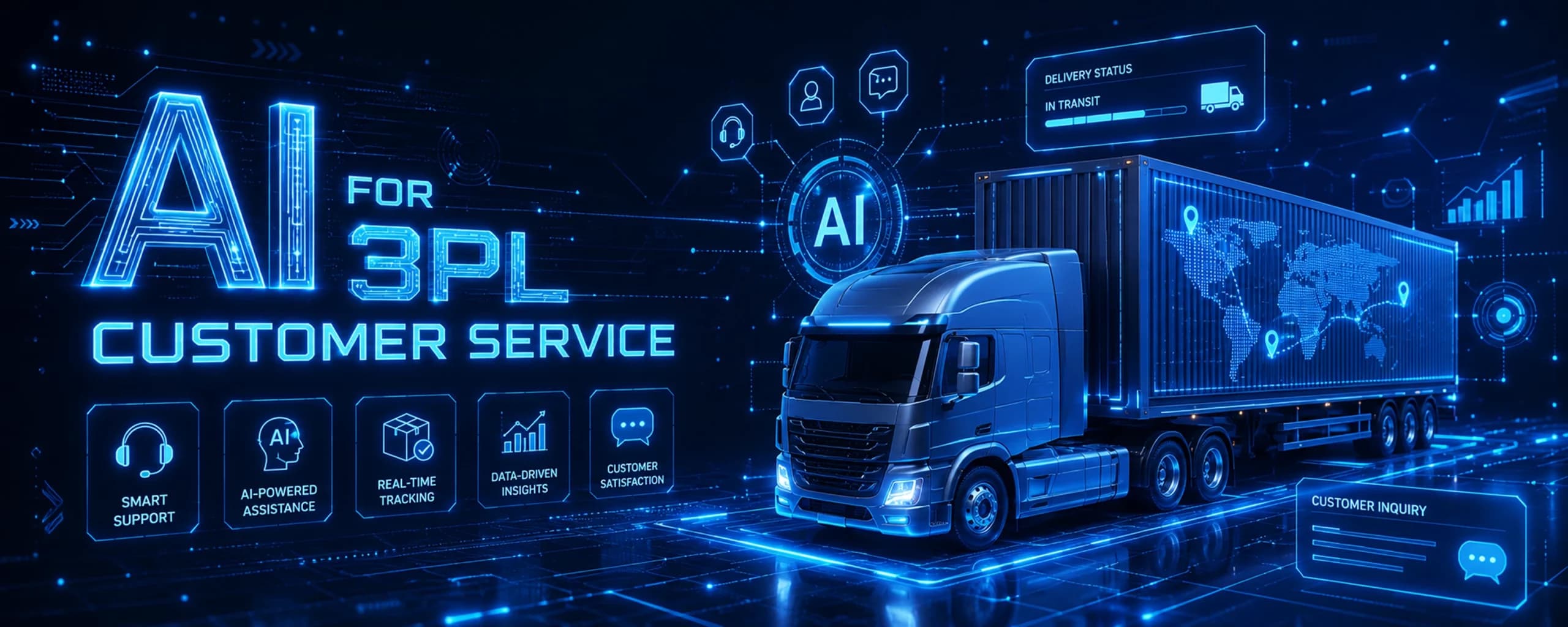
AI Quote Assistant: How Logistics Teams Automate Freight Quotes

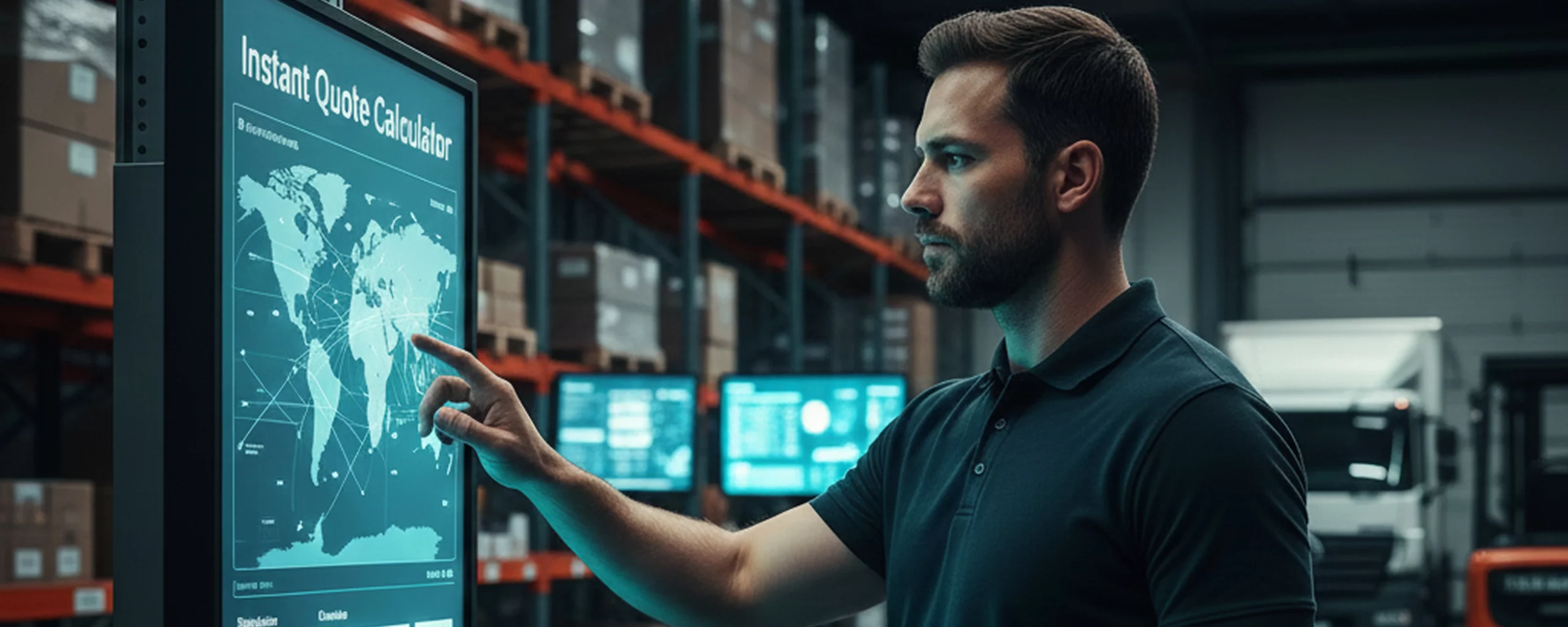
Logistics operaitons face mounting pressure to deliver quotes faster than ever before. An AI quote assistant transforms how freight forwarders, 3PLs, and last-mile providers respond to pricing requests. Manual quoting processes consume hours of valuable time that could be spent on strategic growth initiatives.
Today’s shippers expect instant responses, accurate pricing, and transparent breakdowns of costs. Traditional methods involving spreadsheets, email chains, and multiple phone calls simply can’t keep pace with market demands. The logistics industry is evolving rapidly, and companies that hesitate risk losing business to more agile competitors.
Smart logistics teams are turning to AI-powered solutions to automate their quoting workflows. These systems process complex variables in seconds, pulling from rate tables, fuel surcharges, accessorial fees, and real-time capacity data. The result is faster turnaround, fewer errors, and dramatically improved customer satisfaction.
Why Logistics Teams Need an AI Quote Assistant Now
Freight quoting has become one of the most time-consuming and error-prone parts of logistics operations. These delays slow down sales cycles and frustrate customers.
An AI Quote Assistant solves these problems by automating the entire quoting process. It retrieves real-time rates, analyzes historical data, applies rules, and generates a complete quote instantly. It also supports custom margins, customer contracts, lane-specific pricing, and complex accessorials.
Key Market Pressures Driving AI Adoption:
– Customer expectations for sub-15-minute quote turnaround times
– Rising operational costs requiring maximum efficiency from smaller teams
– Complex pricing variables including fuel, accessorials, and capacity fluctuations
– Competitive threats from digital-native freight platforms
– Labor shortages making it difficult to hire experienced pricing analysts
– Need for data-driven insights to optimize pricing strategies
Companies deploying AI quote assistants report 60-80% reductions in quote processing time. That efficiency translates directly to higher quote volumes without proportional increases in headcount.
How Isometrik’s AI Quote Assistant Works
Isometrik’s solution integrates directly with existing TMS and rate databases. The AI quote assistant pulls real-time information from multiple sources to generate accurate pricing within seconds. No rip-and-replace implementation required—the system works alongside your current tech stack.
The platform uses NLP to understand quote requests submitted via email, chat, or web forms. Customers describe their shipping needs in plain language, and the system extracts key details like origin, destination, weight, dimensions, and service requirements.
Core Functionality Overview:
| Feature | Capability | Business Impact |
| Rate calculation Engine | Processes 50+ variables including base rates, fuel surcharges, accessorials, and special handling fees | Eliminates manual calculation |
| Multi-modal support | Handles FTL, LTL, intermodal, ocean, air, and last-mile delivery quotes | Serves diverse customer needs from single platform |
| Real-time integration | Connects with TMS, WMS, and carrier portals for live capacity and pricing data | Provides current market rates and available capacity |
| Smart routing | Analyzes multiple route options to identify most cost-effective and time-efficient paths | Optimizes delivery times while controlling costs |
| Automated follow-up | Sends reminders and updates to prospects without manual intervention | Improves conversion rates through consistent engagement |
The system generates professional quote documents automatically, complete with itemized breakdowns and terms and conditions. Customers receive polished proposals that enhance your brand presentation.
Isometrik’s AI quote assistant also handles complex scenarios that typically require expert intervention. Multi-leg shipments, hazmat requirements, temperature-controlled freight, and oversized cargo all get processed accurately.
What makes the process smarter?
- AI learns from accepted and rejected quotes
- AI identifies underpriced or overpriced patterns
- AI adjusts rates based on lane performance
- AI analyzes competitor pricing when available
- AI reduces human errors in cost breakdowns
These features accelerate sales while making pricing more consistent.
Key Use Cases Across Freight, 3PL, and Last-Mile
Different logistics segments require different quoting methods. The AI Quote Assistant adapts to each model.
Major Use Cases
- LTL Freight
AI selects carriers, reviews tariffs, checks cubic capacity, and applies NMFC class logic. - FTL Truckload
AI compares route distances, fuel costs, lane demand, and historical carrier rates. - Air Freight
AI calculates dimensional weight and integrates with airport-to-airport carrier rates. - Ocean Freight
AI handles complex surcharges, port fees, and container types. - Parcel and Ecommerce
AI accounts for zone-based pricing and service levels. - Last-Mile Delivery
AI adjusts rates using real-time driver capacity and geographic density. - Warehousing
AI calculates storage, handling, pick-and-pack, and special service fees.
Use Cases Across Logistics Segments
| Segment | What the AI Quote Assistant Automates |
| LTL | Tariffs, lane rates, accessorials, class-based pricing |
| FTL | Fuel costs, distance, carrier availability |
| Air Freight | Dimensional weight, surcharges, routing |
| Ocean Freight | Container rates, port charges, seasons |
| Parcel | Zone-based pricing, service-level comparison |
| Last-Mile | Driver availability, urban density pricing |
| Warehousing | Storage fees, handling, pallet calculations |
The flexibility of the AI Quote Assistant ensures a consistent pricing experience across all logistics services.
Benefits and ROI of Deploying an AI Quote Assistant
An AI Quote Assistant removes friction from logistics pricing. It improves speed, accuracy, and efficiency.
Top Benefits
- Faster Quotes
Generate quotes in seconds instead of minutes or hours. - Higher Accuracy
Automated rate retrieval reduces mistakes. - Lower Operational Costs
Fewer manual tasks mean smaller quoting teams. - Increased Win Rates
Faster responses lead to higher conversions. - Consistent Pricing
Quotes follow predefined rules and margins. - Better Customer Experience
Sales teams respond quicker and with clarity.
Manual vs. AI Quoting Comparison
| Category | Manual Quoting | AI Quote Assistant |
| Speed | 10–45 mins | Under 60 seconds |
| Accuracy | Varies by agent | Consistent and automated |
| Cost | High labor hours | Lower operational cost |
| Customer Experience | Delayed responses | Fast, competitive quotes |
| Scalability | Depends on team size | Unlimited quoting capacity |
ROI Snapshot — Before vs. After AI Quote Assistant
| KPI | Before | After | Typical Improvement |
| Quote Turnaround Time | 30 mins | < 1 min | 90–95% faster |
| Quote Accuracy | 70–80% | 95–99% | +20% improvement |
| Win Rate | 30–45% | 50–65% | +15–20% increase |
| Cost per Quote | High | Low | 25–40% reduction |
These improvements directly impact revenue, cost savings, and customer retention.
Implementation Roadmap for Logistics Teams
Deploying an AI Quote Assistant does not require rebuilding your systems. Isometrik’s solution integrates smoothly with logistics workflows.
Phase 1: Assessment and Planning (Weeks 1-2)
Begin with comprehensive evaluation of current quoting processes. Document average quote volumes, complexity levels, and common pain points. Interview team members who handle quotes daily to understand workflow challenges and feature requirements. This groundwork ensures the AI quote assistant addresses real operational needs.
Identify integration requirements with existing systems including TMS, WMS, CRM, and rate management platforms. Determine data sources that will feed the AI system such as carrier rate tables, fuel index sources, and accessorial fee schedules.
Phase 2: System Configuration (Weeks 3-5)
Work with Isometrik’s implementation team to configure the AI quote assistant for your specific business rules. Input rate tables, pricing formulas, and service level definitions. Set up customer-specific pricing arrangements and volume discount tiers. Configure approval workflows for quotes exceeding certain thresholds.
Customize quote templates to match your brand standards and include required terms and conditions. Set up integration connections with your core systems to enable real-time data flow.
Phase 3: Training and Testing (Weeks 6-7)
Train team members on using the AI quote assistant effectively. Cover both customer-facing quote requests and back-end management functions. Conduct extensive testing with real historical quote requests to validate accuracy. Compare AI-generated quotes against manually created versions to verify correctness.
Run parallel operations where the AI system generates quotes that humans verify before sending to customers. This safety net builds confidence in the system’s reliability.
Phase 4: Pilot Launch (Weeks 8-10)
Deploy the AI quote assistant to a limited customer segment or specific lanes initially. Monitor performance closely and gather feedback from both team members and customers. Track key metrics including quote response time, accuracy rates, and conversion rates compared to baseline performance.
Make iterative improvements based on pilot results. Address any edge cases or scenarios where the system needs additional training.
Phase 5: Full Rollout (Weeks 11-12)
Transition all quoting operations to the AI-assisted model. Communicate the change to customers as a service improvement that enables faster, more accurate pricing. Maintain human oversight for complex or high-value quotes during the initial rollout period.
Continue monitoring performance and gathering feedback. Document efficiency gains and ROI metrics to justify the investment.
Challenges, Considerations, and Best Practices
While AI transforms quoting, logistics leaders must plan the rollout carefully.
Data Quality Issues
AI accuracy depends on clean rate tables, consistent naming conventions, and complete accessorial fee schedules. Poor data results in incorrect quotes. Before onboarding, prioritize data cleanup and then maintain accuracy through ongoing data governance, scheduled rate reviews, and clear ownership of updates.
Change Management Resistance
Team pushback often stems from fear of job displacement. Position the AI quote assistant as a tool that eliminates repetitive tasks—not jobs—allowing staff to focus on customer relationships and complex problem-solving. Involve teams early, gather workflow input, highlight early wins, and reward fast adopters to build buy-in.
Integration Complexity
Legacy systems and limited APIs can complicate deployment. Work with IT and technical partners to design phased integrations, starting with the most critical systems. Gradual rollouts reduce disruption and support faster value realization.
Best Practices for Success:
| Practice Area | Recommendation | Rationale |
| Data Preparation | Invest 2-3 weeks in data cleanup before launch | Ensures accuracy from day one |
| Team training | Provide hands-on practice sessions, not just demos | Ensure accuracy from day one |
| Performance monitoring | Track 5-7 metrics weekly during first 90 days | Enables quick course corrections |
| Customer communication | Proactively inform customer about faster quotes | Sets positive expectations |
| Continuous improvement | Schedule monthly reviews of system performance | Drives ongoing optimisation |
Conclusion: AI Quote Assistant
An AI Quote Assistant is becoming essential for modern logistics operations. It cuts manual work, improves accuracy, and speeds up customer response. With faster quoting, logistics teams win more bids and operate with higher efficiency.
Isometrik’s AI Quote Assistant helps freight forwarders, 3PLs, carriers, and last-mile providers automate quoting workflows at scale — with white-label flexibility and seamless integration into their existing systems. As pricing becomes more competitive, AI-driven quoting will become the industry standard.