AI Route Optimization for Logistics Companies: Cut Costs, Deliver Faster

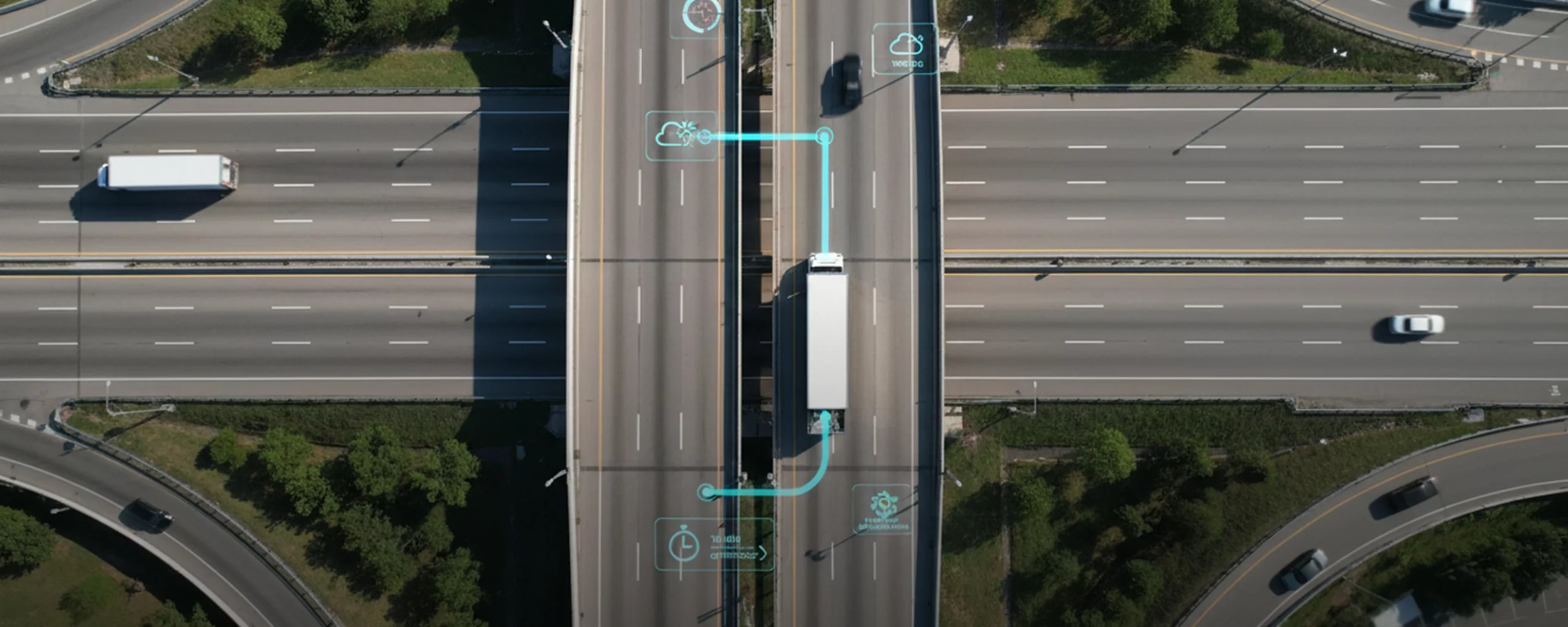
The math can’t get more real here. U.S. logistics companies spend over $1.6 trillion on transportation annually. A significant chunk of that is eaten up by inefficient routes, underutilized trucks, and poor delivery sequencing. AI route optimization for logistics companies is changing that quagmire — fast.
This isn’t about swapping one routing tool for another. It’s about replacing static, manual planning with a system that thinks, adapts, and improves with every delivery. Here’s what that looks like in practice — and what it takes to get there.
Why Logistics Companies Can’t Afford Manual Route Planning Anymore
Manual route planning made sense when delivery volumes were manageable. Today, it’s a liability. The average U.S. delivery van makes around 120 stops a day. Each stop carries its own time window, access restriction, and customer preference. No dispatcher can optimize that consistently — not at scale, and not in real time.
Pressure is mounting from multiple directions simultaneously. Fuel costs remain volatile. The U.S. trucking industry faces a shortage of over 60,000 drivers. Customers now expect same-day or next-day delivery as a baseline, not a premium. Manual routing simply can’t keep up with those demands.
Here’s what it’s costing logistics companies right now:
- Empty or underutilized trucks completing solo-stop routes unnecessarily
- Zero real-time adjustment for traffic, weather, or sudden road closures
- High cost-per-delivery with no clear optimization lever to pull
- Cascading delays from poor stop sequencing and inefficient dispatch
- Driver burnout caused by routes that weren’t planned with workload in mind
The gap between what manual planning delivers and what modern logistics demands is too wide to paper over. Something structural has to change.
What AI Route Optimization for Logistics Companies Actually Does
AI route optimization for logistics companies isn’t a single feature — it’s a connected system. It ingests data, models operational constraints, runs thousands of route scenarios, and selects the best possible path — all in seconds. Understanding what’s under the hood helps evaluate what any platform actually delivers.
A fully functional AI route optimization engine processes five distinct categories of input data simultaneously:
| Input Data Type | Examples | Why It Matters |
| Network & Geographic Data | Road hierarchy, distance matrices, connectivity maps | Foundation for accurate route modeling |
| Time-Based Data | Historical traffic patterns, peak vs. off-peak speeds | Reduces travel time variability significantly |
| Operational Constraints | Vehicle capacity, driver hours, delivery time windows | Ensures regulatory compliance and route feasibility |
| Cost Parameters | Fuel rates, toll charges, labor and maintenance costs | Ties every routing decision directly to P&L impact |
| Real-Time Intelligence | Live GPS feeds, traffic alerts, weather data | Enables dynamic rerouting mid-route, mid-day |
The system continuously re-optimizes based on live inputs. A traffic accident three miles ahead? The route adjusts before the driver even gets close. A customer reschedules a delivery window? The sequence updates automatically. That level of responsiveness is impossible to replicate manually. For a deeper look at how this reshapes logistics economics, explore the benefits of AI in logistics.
The Algorithms Do the Heavy Lifting
Not all route optimization engines are equal. The sophistication of the underlying algorithm determines how good the output actually is — especially at scale. Most enterprise-grade systems combine classical methods with machine learning to handle both predictable and unpredictable conditions.
Here’s how the algorithmic landscape breaks down:
| Algorithm Type | Key Methods | Best Applied To |
| Classical Algorithms | Dijkstra’s, Bellman-Ford, A* | Shortest path, point-to-point routing problems |
| Heuristic & Metaheuristic | Genetic algorithms, Tabu search, Ant Colony Optimization | Large, complex VRP problems at enterprise scale |
| Machine Learning & Predictive | Deep reinforcement learning, LSTM forecasting, neural nets | Dynamic, real-time routing under volatile conditions |
Cutting-edge vehicle routing research from MIT’s Center for Transportation and Logistics confirms that ML-enhanced methods now outperform traditional operations research approaches — particularly for same-day delivery scenarios where conditions shift fast.
The Vehicle Routing Problem (VRP) is the core challenge all these algorithms address. It determines the optimal set of routes for a fleet serving multiple delivery points, accounting for capacity, time windows, driver hours, and multi-depot operations. No dispatcher can solve that optimally for 500 stops. A well-trained ML model can — and it gets better over time.
Real Results: What the Numbers Actually Say
The ROI case for AI route optimization is no longer theoretical. Logistics operators across the U.S. are posting measurable, repeatable results — not marginal improvements, but structural gains.
AI platforms analyzing thousands of global shipping routes daily consistently deliver:
- 22% reductions in transit times through real-time adaptive routing
- 15% decreases in shipping costs from load consolidation and mileage reduction
- 25% lower delivery costs through improved fleet utilization and stop sequencing
- Significant fuel savings by eliminating unnecessary mileage and idle time
- Improved on-time delivery performance, reducing penalty charges and customer churn
Research on transportation route optimization shows that companies shifting from static to AI-driven planning reduce cost-per-delivery substantially — not by cutting service corners, but by eliminating the waste baked into manual routing.
Beyond the numbers, the operational shift matters. AI moves logistics from reactive firefighting to proactive delivery management. Dispatchers spend less time chasing delays and more time on high-value decisions. That’s a compounding advantage — every month the system learns, results improve further.
Key Use Cases Across Logistics Operations
AI route optimization for logistics companies isn’t one-size-fits-all. The application varies significantly across logistics types and business models. The core technology adapts well across all of them.
| Logistics Type | AI Route Optimization Application | Primary Benefit |
| Last-Mile Delivery | Dynamic stop sequencing with live time window management | Fewer failed deliveries, faster customer turnaround |
| Long-Haul Trucking | Fuel-optimal corridor planning with HOS compliance | Lower fuel costs, full regulatory adherence |
| 3PL & Multi-Client Operations | Multi-depot, multi-vehicle routing across client pools | Better fleet utilization and margin per client |
| E-Commerce Fulfillment | Same-day route generation with real-time rerouting | Consistent next-day SLA delivery performance |
| Cold Chain & Specialty Freight | Time-constrained routing with compliance and temp overlays | Product integrity maintained end-to-end |
For companies managing supply chain automation at scale, route optimization is often the highest-ROI starting point. It directly impacts fuel spend, driver productivity, and customer satisfaction — all at once.
The route optimization strategies deployed by leading last-mile providers show a consistent pattern: companies combining AI routing with real-time tracking see the biggest and most sustained gains. Static optimization alone leaves significant money on the table.
How to Implement AI Route Optimization Without Disrupting Operations
The biggest concern most logistics leaders have isn’t whether AI works. It’s whether implementation will break what’s already functioning. That concern is legitimate — and manageable with the right approach.
Here’s a practical implementation sequence that minimizes disruption:
- Audit your current routing process. Map where delays, cost spikes, and underutilized capacity occur most. These are your optimization targets.
- Define your objective hierarchy. Decide whether you’re optimizing first for cost, time, or service level — priorities vary significantly by business model and customer segment.
- Integrate with your existing TMS. AI route optimization works best when connected to your Transportation Management System for live shipment and driver data.
- Run a controlled pilot on a subset of routes. Start with one region or depot before full rollout. This limits risk and builds internal confidence in the system.
- Measure against clear baseline KPIs. Track cost-per-delivery, on-time performance, fuel efficiency, and fleet utilization from day one. No metrics, no momentum.
The right logistics automation software integrates cleanly with existing TMS platforms without a full system overhaul. DHL’s own route optimization framework highlights that the most effective implementations combine real-time data with multi-objective constraints — not just the shortest path, but the optimal path given cost, capacity, and time.
Purpose-built platforms deploy in weeks, not months, and show measurable ROI within the first quarter of operation. For a broader view on how AI is reshaping logistics end-to-end, logistics automation systems provide the full picture.
Scale Smarter: Book a Strategy Call with Isometrik AI
If you’re evaluating AI route optimization for your logistics operation, Isometrik AI’s AI in logistics platform is purpose-built for companies that need results fast — without rebuilding their existing tech stack.
Isometrik’s logistics AI handles route optimization coordination, proactive shipment tracking, automated customer communication, and real-time exception management — all integrated with your existing TMS. Platforms supported include McLeod, TMW, Oracle, SAP, and Manhattan. Companies using the platform report a 30% reduction in operational costs, a 60% drop in inbound customer service call volume, and full deployment in 6–8 weeks.
AI route optimization for logistics companies is no longer a future investment — it’s a present-day competitive necessity. The companies moving now are building operational advantages their competitors will struggle to close.
Book a free strategy call with Isometrik and get a practical, no-fluff roadmap tailored to your fleet, your routes, and your business model.