AI Solutions for Manufacturing: Revolutionizing Industrial Operations

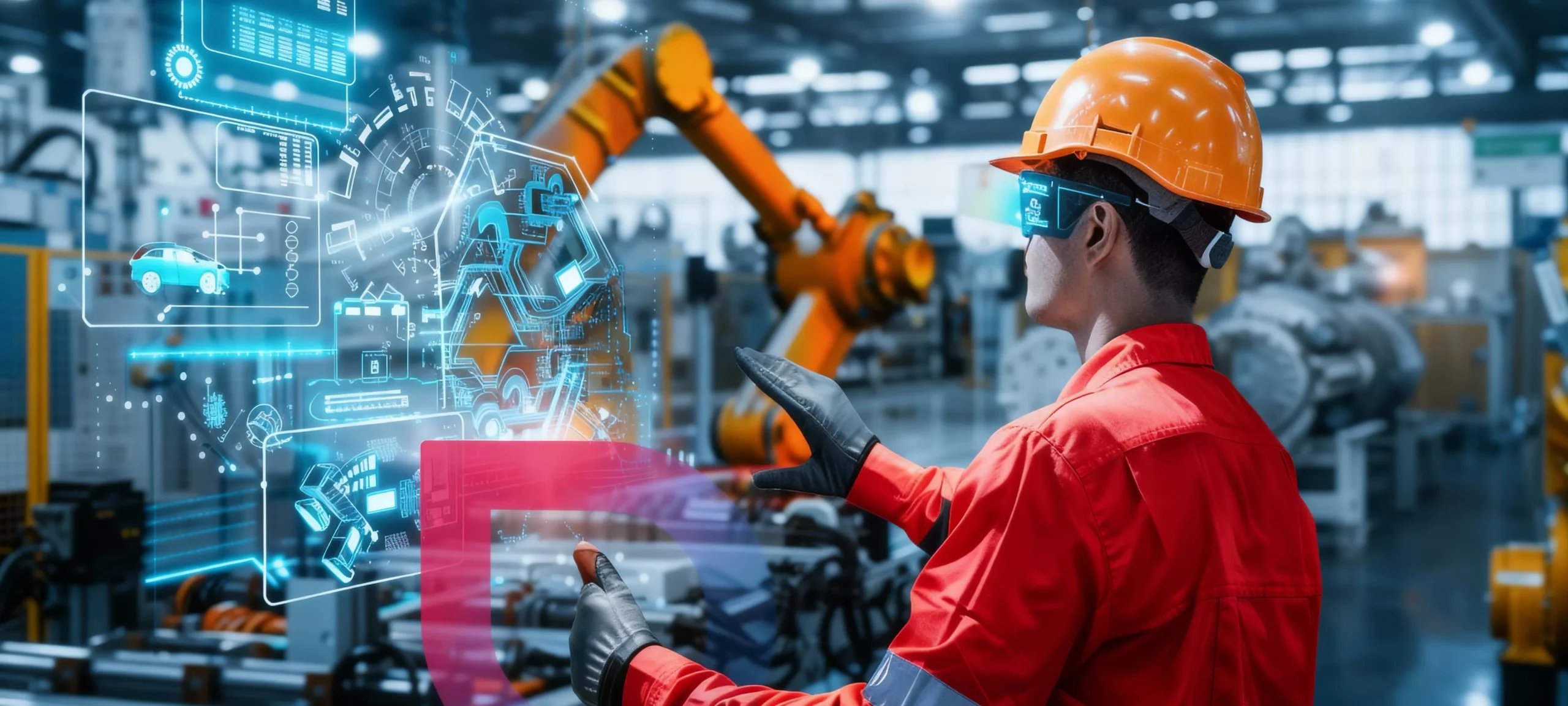
Manufacturing stands at the forefront of AI transformation across global industries. AI solutions for manufacturing are delivering unprecedented efficiency gains and competitive advantages that fundamentally reshape industrial operations worldwide.
The numbers demonstrate remarkable market growth and transformation potential:
- Global AI manufacturing market reached $5.8 billion and projected at explosive 35.3% CAGR to $155.04 billion by 2030
- Industrial leaders report 45-60% gains in overall equipment effectiveness through comprehensive AI implementation
- Predictive maintenance systems reduce unplanned downtime by more than 50% while optimizing equipment performance
- Global industrial AI market reached $43.6 billion with 23% CAGR growth to $153.9 billion by 2030
These transformative results demonstrate why AI solutions for manufacturing have become critical for modern industrial competitiveness and operational excellence.
The Evolution of Smart Manufacturing
Modern AI solutions for manufacturing extend far beyond basic automation into comprehensive intelligent manufacturing ecosystems that adapt and optimize continuously.
Current AI Manufacturing Capabilities
- Machine learning integration dominating at 33.1% market share for data-driven decision-making
- Computer vision systems achieving 99.5% accuracy in quality control and defect detection
- Predictive analytics providing 95% accuracy in equipment failure prediction and maintenance planning
- Autonomous optimization continuously improving performance without human intervention
These sophisticated solutions analyze vast amounts of sensor data, optimize production parameters in real-time, and predict equipment failures with remarkable accuracy and reliability.
Core AI Solutions Transforming Manufacturing Excellence
Predictive Maintenance Revolution
AI solutions for manufacturing excel in predictive maintenance applications, representing 25% of the market share with transformative impact on operational efficiency and cost reduction.
Predictive Maintenance Capabilities:
- Vibration pattern analysis detecting mechanical wear and potential failures before they occur
- Thermal imaging processing identifying overheating and electrical issues across equipment
- Oil analysis integration monitoring lubricant condition and contamination levels automatically
- Acoustic signature monitoring recognizing abnormal equipment sounds and operational patterns
Advanced predictive maintenance implementations achieve 95% accuracy in failure prediction while reducing maintenance costs by up to 40%. These systems automatically schedule maintenance during optimal windows, ensuring production continuity while maximizing equipment lifespan and performance.
Advanced Quality Control Systems
AI-powered quality control represents one of the most impactful applications among AI solutions for manufacturing, revolutionizing how companies ensure product quality and consistency.
Quality Control Features:
- 99.5% accuracy in defect detection while maintaining production line speeds and throughput
- Real-time quality assessment providing immediate feedback and automated corrections
- Automated defect categorization streamlining quality management processes and reporting
- Predictive quality analysis preventing issues before they affect products or customers
Computer vision systems detect defects, anomalies, and dimensional variations with superior performance compared to traditional inspection methods. These systems process visual information faster and more accurately than human inspection while maintaining consistent performance standards.
Intelligent Production Optimization
AI solutions for manufacturing optimize production parameters continuously using real-time data analysis across multiple operational variables simultaneously.
Production Optimization Benefits:
- 35% improvement in production efficiency through optimized workflows and resource utilization
- 20% reduction in energy consumption via intelligent resource management and timing optimization
- 15% increase in throughput while maintaining or improving quality standards
- Dynamic parameter adjustment responding to changing conditions automatically without human intervention
Production optimization AI analyzes factors including material properties, environmental conditions, demand forecasts, equipment status, and energy costs to recommend optimal operating parameters automatically.
Supply Chain Intelligence and Automation
Current AI solutions for manufacturing extend throughout entire supply chains, analyzing supplier performance, market trends, demand patterns, and logistics optimization opportunities comprehensively.
Supply Chain AI Capabilities:
- 30% reduction in inventory costs through optimized stock levels and demand prediction
- 25% improvement in supplier performance via intelligent monitoring and evaluation
- 40% faster response to supply disruptions through predictive analytics and automation
- Real-time optimization of procurement, logistics, and inventory management processes
Predictive analytics help manufacturers anticipate material shortages, optimize inventory investment, and reduce supply chain risks through intelligent supplier diversification and contingency planning.
Autonomous Robotics and Collaboration
AI solutions for manufacturing leverage collaborative robots and autonomous systems that work safely alongside human workers while enhancing productivity and precision.
Robotics Integration Benefits:
- 90% reduction in automation costs compared to traditional industrial automation approaches
- Precision task handling for operations requiring accuracy beyond human capabilities
- Adaptive manipulation learning from demonstrations and improving performance continuously
- Safety enhancement reducing workplace injuries through intelligent hazard detection
Modern industrial robots use AI for path planning, object recognition, quality inspection, and adaptive manipulation. They learn from human demonstrations and continuously improve performance through machine learning algorithms.
Industry-Leading Implementation Examples
Advanced Smart Factory Deployments
Leading manufacturers have deployed comprehensive smart factory solutions integrating AI across all operational systems for maximum efficiency and competitive advantage.
Smart Factory Characteristics:
- Autonomous operation for routine tasks with human oversight for complex decisions
- AI integration across demand forecasting, production scheduling, quality management, and maintenance planning
- Real-time optimization of energy consumption, resource allocation, and production parameters
- Compound benefits exceeding the sum of individual AI applications through systematic integration
Current smart factory implementations demonstrate how systematic AI integration creates competitive advantages that are difficult for competitors to replicate.
Semiconductor and Electronics Manufacturing
The semiconductor and electronics segment holds the highest market share in AI manufacturing applications, driven by precision requirements and complex process optimization needs.
Semiconductor AI Applications:
- Yield optimization using AI to analyze thousands of process parameters simultaneously
- Defect prediction identifying quality issues before they affect production
- Process control maintaining optimal conditions for semiconductor fabrication
- Quality assurance achieving inspection accuracy at nanometer scales
AI systems analyze complex fabrication processes to optimize semiconductor manufacturing, achieving yield improvements of 15-25% while reducing production costs and accelerating time-to-market for new products.
Automotive Industry AI Integration
Automotive manufacturers extensively implement AI solutions for production planning, quality control, predictive maintenance, and supply chain optimization across global operations.
Automotive Manufacturing AI:
- Mass customization enabling personalized vehicle configurations without efficiency loss
- Predictive maintenance optimizing assembly line equipment performance
- Supply chain coordination managing complex networks of thousands of components
- Quality optimization ensuring safety and performance standards across all vehicles
AI-powered systems optimize vehicle configuration, predict maintenance requirements, and coordinate complex supply chains involving thousands of components from multiple suppliers globally.
Technical Components of Manufacturing AI Solutions
Machine Learning and Deep Learning
AI solutions for manufacturing leverage sophisticated machine learning algorithms to analyze production data, identify patterns, and optimize processes continuously without human intervention.
Machine Learning Applications:
- Pattern recognition identifying trends and anomalies in operational data
- Predictive modeling forecasting equipment behavior and maintenance needs
- Process optimization improving performance based on historical and real-time data
- Adaptive learning continuously improving accuracy and effectiveness over time
These algorithms learn from historical performance data, environmental conditions, and operational parameters to improve decision-making accuracy while adapting to changing manufacturing conditions automatically.
Computer Vision and Image Recognition
Advanced computer vision systems inspect products, monitor equipment conditions, and ensure safety compliance in manufacturing environments with superior accuracy and speed.
Computer Vision Capabilities:
- Product inspection detecting surface defects, dimensional variations, and assembly errors
- Equipment monitoring identifying wear patterns, damage, and maintenance needs
- Safety compliance ensuring workers follow safety protocols and identifying hazards
- Real-time processing analyzing visual information faster than human inspection methods
Quality control applications use computer vision to detect problems in real-time production environments with sub-millimeter precision while maintaining production line speeds.
Industrial IoT Integration
AI solutions for manufacturing integrate with comprehensive Industrial IoT sensor networks collecting operational data across entire manufacturing ecosystems for comprehensive optimization.
IoT Integration Benefits:
- Real-time monitoring providing continuous visibility into all operational parameters
- Comprehensive data collection from sensors measuring temperature, pressure, vibration, and environmental conditions
- Predictive capabilities using sensor data to anticipate equipment failures and process issues
- Automated response enabling immediate adjustment to changing conditions
Sensor networks provide data including temperature, pressure, vibration, acoustic signatures, energy consumption, and environmental conditions that inform AI algorithms and enable predictive capabilities across all manufacturing operations.
Digital Twin Technology
Digital twins create virtual representations of manufacturing assets, processes, and entire factories, enabling simulation, optimization, and predictive analysis without disrupting physical operations.
Digital Twin Applications:
- Process simulation testing changes before implementation in physical systems
- Predictive analysis forecasting performance improvements and potential issues
- Optimization modeling identifying optimal operating parameters across complex systems
- Risk assessment evaluating potential impacts of operational changes
These models update continuously with real-world data to maintain accuracy while enabling manufacturers to test process changes, optimize maintenance schedules, and predict performance improvements before implementation.
Implementation Strategies for Manufacturing AI Success
Comprehensive Assessment and Planning
Successful AI solutions for manufacturing implementation begins with systematic assessment of current operations, identification of high-impact opportunities, and development of strategic implementation roadmaps.
Assessment Elements:
- Operational analysis identifying processes where AI can deliver maximum value
- Technology evaluation ensuring compatibility with existing systems and infrastructure
- ROI calculation prioritizing implementations based on expected business impact
- Resource planning allocating adequate budget, personnel, and timeline for success
Focus on applications where AI can address specific operational challenges, unlock new capabilities, or deliver measurable business value with clear return on investment potential.
Cloud-Native Architecture Development
Modern AI solutions for manufacturing leverage cloud-native architectures providing scalability, automatic updates, and access to cutting-edge AI capabilities without massive infrastructure investments.
Cloud Platform Advantages:
- Scalable computing providing resources that grow with business needs and AI complexity
- Automatic updates ensuring access to latest AI capabilities without manual intervention
- Reduced infrastructure costs eliminating need for massive upfront technology investments
- Global deployment supporting international operations and distributed manufacturing
Cloud platforms enable real-time data processing, advanced analytics, and machine learning model deployment across distributed manufacturing operations while ensuring data security and regulatory compliance.
Skills Development and Change Management
Manufacturing AI success requires combining external expertise with systematic internal talent development across technical and operational teams.
Development Programs:
- Technical training building AI implementation and maintenance capabilities
- Operational education helping teams work effectively with AI-enhanced systems
- Leadership development ensuring management understands AI potential and limitations
- Change management facilitating smooth adoption and cultural adaptation
Comprehensive change management ensures smooth adoption while helping workforce adapt to AI-enhanced manufacturing processes and new operational procedures that maximize technology benefits.
Measuring Success in Manufacturing AI Implementation
Comprehensive Performance Metrics
Track operational and financial metrics including overall equipment effectiveness, quality rates, energy efficiency, safety improvements, and production costs across all areas impacted by AI implementation.
Key Performance Indicators:
- Equipment effectiveness measuring uptime, performance, and quality improvements
- Cost reduction tracking savings from maintenance optimization, energy efficiency, and waste reduction
- Quality improvements monitoring defect rates, consistency, and customer satisfaction
- Safety enhancements measuring accident reduction and compliance improvements
Advanced analytics platforms provide real-time dashboards showing AI performance across multiple dimensions, enabling data-driven optimization and continuous improvement initiatives that sustain competitive advantages.
Return on Investment Analysis
Calculate ROI based on productivity improvements, cost reductions, quality enhancements, and risk mitigation achieved through comprehensive AI implementation.
ROI Components:
- Direct savings from reduced maintenance costs, energy efficiency, and waste elimination
- Revenue improvements through increased production capacity, quality enhancements, and faster time-to-market
- Risk mitigation preventing costly failures, quality issues, and safety incidents
- Competitive advantages enabling market share growth and premium pricing opportunities
Most manufacturers achieve positive ROI within 12-18 months through improved efficiency and reduced operational costs, with benefits accelerating as systems learn and optimize performance continuously.
Professional Implementation Excellence
AI solutions for manufacturing require expertise in both industrial operations and advanced AI technology for successful implementation that delivers sustained competitive advantages.
Implementation Success Factors:
- Industrial expertise understanding manufacturing challenges and operational requirements
- Technical knowledge ensuring proper AI deployment and integration with existing systems
- Change management helping organizations adapt to new capabilities and processes
- Ongoing optimization continuously improving performance based on operational data and feedback
Isometrik AI specializes in developing and deploying manufacturing-focused AI solutions that integrate seamlessly with existing operations while delivering measurable results. Our expertise spans predictive maintenance, quality control, production optimization, and supply chain intelligence.
Ready to transform your manufacturing operations with AI? Isometrik AI provides the expertise and technology solutions you need to achieve operational excellence and competitive advantage through intelligent manufacturing.
Contact us to explore how our AI solutions for manufacturing can accelerate your digital transformation and drive sustainable business growth.