AI Solutions in Logistics: Reducing Costs and Boosting Efficiency in 2026

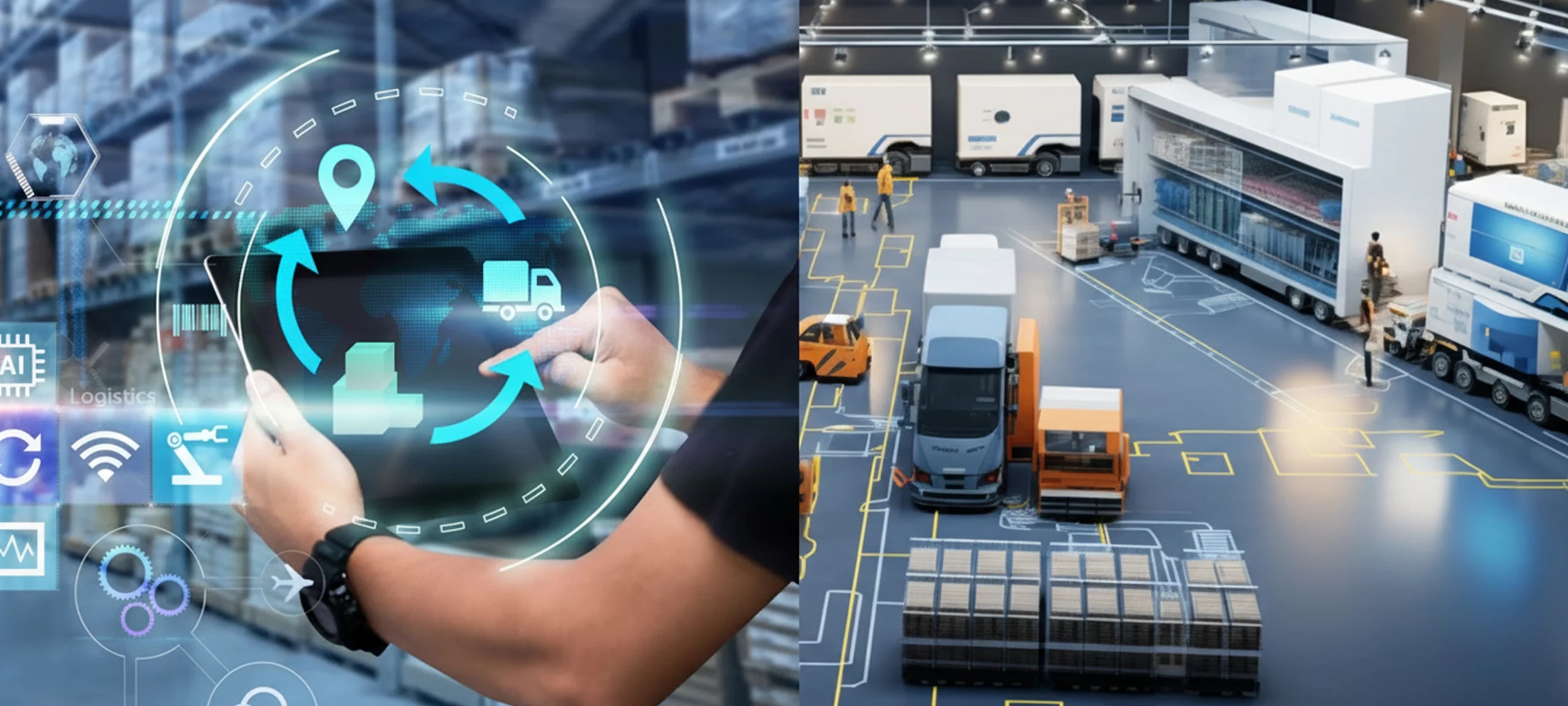
Logistics companies today operate on razor-thin margins while facing mounting pressures from every direction. U.S. business logistics costs hit $2.6 trillion in 2024—representing 8.7% of the national GDP. Driver shortages, surging fuel prices, and customers demanding real-time visibility are squeezing profitability.
AI solutions in logistics are transforming how companies operate, offering practical ways to cut costs, streamline operations, and enhance customer satisfaction. The logistics AI market grew from $17.96 billion in 2024 and is racing toward $707.75 billion by 2034.
Companies implementing these technologies report 30% reductions in operational costs and 60% fewer customer service calls. The question isn’t whether to adopt AI—it’s how quickly you can implement it.
Why Logistics Companies Are Turning to AI Solutions Right Now
What worked five years ago barely works now. Customer expectations have skyrocketed—everyone wants Amazon-level tracking and delivery precision. Manual scheduling creates bottlenecks. Reactive problem-solving means you’re always putting out fires instead of preventing them.
Here’s what’s driving the urgent shift to AI solutions in logistics:
- Crushing labor costs: Customer service reps spend 40% of their time on tracking inquiries alone
- Margin pressure: Transportation costs consume over two-thirds of total logistics expenses
- Driver shortage crisis: The industry faces a persistent shortage of qualified drivers
- Customer churn risk: Slow responses and poor visibility drive customers to tech-savvy competitors
The financial impact is undeniable. According to recent research, AI has the potential to reduce supply chain and logistics costs by 15-20% through process optimization. Companies that wait are watching competitors gain decisive advantages.
| Challenge | Traditional Approach | AI Solution | Impact |
| Customer inquiries | Manual phone/email responses | Automated 24/7 tracking updates | 60% reduction in service calls |
| Route planning | Static schedules | Real-time dynamic optimization | 25% reduction in empty miles |
| Exception handling | Reactive firefighting | Proactive alerts and alternatives | 30% faster resolution times |
| Client acquisition | Manual prospecting | AI-powered lead generation | 15% shorter sales cycles |
Core AI Solutions in Logistics Transforming Operations
The most impactful AI applications in logistics focus on solving specific operational headaches. These aren’t theoretical concepts—they’re working solutions delivering measurable results today.
Route optimization uses real-time data from GPS, traffic services, and delivery schedules to determine the most efficient paths. UPS’s ORION system processes 30,000 route optimizations per minute, saving 38 million liters of fuel annually and preventing 100,000 metric tons of carbon emissions.
Warehouse automation has evolved beyond simple robotics. AI agent systems now handle inventory slotting, order picking optimization, and predictive maintenance. These systems analyze access frequency, item size, and order velocity to reduce picking time and improve space utilization.
Demand forecasting incorporates real-time market data, seasonality, promotions, and even social media sentiment to produce more accurate predictions. This positions inventory closer to demand hubs, reducing carrying costs while improving responsiveness to customer needs.
Automated customer communication handles tracking inquiries, delivery confirmations, and exception notifications across phone, SMS, email, and chat—instantly. Conversational AI platforms provide 24/7 support without human intervention, maintaining context across multiple interactions and channels.
Predictive maintenance analyzes equipment usage patterns to identify potential failures before they cause downtime. This prevents costly breakdowns and extends asset lifecycles across fleet vehicles and warehouse machinery.
How AI Solutions in Logistics Cut Operational Costs by 30%
The 30% cost reduction figure isn’t marketing hype. It comes from addressing multiple cost centers simultaneously while improving service quality. Here’s how the math works out.
Labor optimization delivers the biggest immediate impact. Automating shipment tracking and customer inquiries eliminates the need for armies of customer service representatives. One AI system handles what previously required 10-15 full-time employees. Companies using AI for customer communication report 60% reductions in service calls while maintaining higher customer satisfaction scores.
Fleet & Fuel Efficiency
Dynamic route optimization reduces empty miles by 25%, cutting fuel costs while enabling drivers to complete more deliveries per shift. Real-time adjustments to traffic, weather, and delivery windows prevent wasted time and resources.
Exception management transforms from reactive to proactive. AI monitors shipments for delays, damages, or issues and automatically notifies customers while suggesting alternatives.
| Cost Area | Annual Spend (Example) | AI Reduction | Annual Savings |
| Customer service labor | $500,000 | 60% | $300,000 |
| Fuel and maintenance | $800,000 | 20% | $160,000 |
| Exception handling | $200,000 | 30% | $60,000 |
| Client acquisition | $300,000 | 15% | $45,000 |
| Total | $1,800,000 | ~31% | $565,000 |
B2B client acquisition also benefits from automation. AI prospecting tools identify potential shipping clients among manufacturers, distributors, and ecommerce brands. Automated outreach campaigns qualify leads and schedule sales meetings, dramatically reducing the sales cycle time and cost per acquisition.
Implementing AI in Your Logistics Operations Without Disruption
The biggest concern logistics operators have about AI isn’t whether it works—it’s whether implementation will disrupt current operations.
Smart implementation follows a phased approach. Start with a comprehensive operations assessment where you map current customer communication workflows, shipment tracking processes, and coordination bottlenecks.
Integration With Existing Systems
Modern logistics AI solutions connect seamlessly with Transportation Management Systems (TMS) like McLeod, TMW, and Oracle, plus Warehouse Management Systems (WMS) like Manhattan and SAP. The AI layer sits on top of your current infrastructure, accessing real-time data without requiring you to rip and replace existing platforms.
Pilot Deployment
Pilot deployment minimizes risk. Launch with a subset of customers or specific routes, letting the AI handle tracking inquiries, send proactive updates, and coordinate pickups while you monitor performance. This approach reveals what works before full-scale rollout.
Most logistics providers can deploy end-to-end AI solutions in 6-8 weeks:
- Weeks 1-2: Operations assessment and workflow mapping
- Weeks 3-8: AI configuration and TMS/WMS integration
- Weeks 9-12: Pilot deployment and performance testing
- Weeks 13-16: Full rollout and optimization
The key is choosing solutions built specifically for logistics workflows rather than generic automation tools. Purpose-built platforms understand TMS data structures, delivery terminology, and industry pain points without extensive customization.
Real-World Results: What AI Solutions Deliver for Logistics Providers
Adoption of AI Solutions in Logistics is accelerating fast. Nearly 47% of small and mid-sized logistics businesses now use AI—up from 18% in 2023—and the results are measurable and immediate.
| Metric | Before AI | After AI | Improvement |
| Customer service calls | 1,000/week | 400/week | 60% reduction |
| On-time delivery rate | 87% | 94% | 7% points |
| Empty miles | 20% of total | 15% of total | 25% reduction |
| Average response time | 4 hours | 30 seconds | 99% faster |
| Client acquisition cost | $5,000 | $4,250 | 15% reduction |
Customer experience improves significantly with automated tracking, proactive exception alerts, and instant responses. In one case, AI-powered freight matching reduced transportation costs by 15% while automating 99.7% of load matching.
Key outcomes reported by logistics providers include:
- 60% reduction in customer service calls
- 7-point increase in on-time delivery rates
- 25% fewer empty miles through route optimization
- 99% faster response times
- 15% lower client acquisition costs
Operational efficiency compounds over time. Companies report up to 15% lower logistics costs and 35% reduced inventory levels through AI-driven demand forecasting.
Future-Proofing Your Logistics Business with AI Solutions
The logistics industry is evolving rapidly, and AI Solutions In Logistics now define competitive advantage. By 2025, more than 65% of logistics companies will use AI across at least one operational area, making adoption essential for long-term growth.
Autonomous vehicles and drones are moving from pilots to real-world deployment, while last-mile delivery optimization is growing by 40% through intelligent routing and predictive analytics. At the same time, IoT integration is enabling connected supply chains with real-time visibility across warehouses, fleets, and inventory using sensors and telematics.
Early adopters of AI solutions are gaining clear advantages:
- Lower operating costs through automation and optimization
- Scalable operations without proportional headcount growth
- Improved customer tracking, communication, and transparency
- Stronger positioning in competitive B2B contracts
- Data-driven decision-making from continuous learning systems
With rising customer expectations, labor shortages, and volatile fuel costs, companies relying on manual processes will fall behind. Cloud-based AI platforms have reduced cost and complexity, allowing faster deployment. The logistics landscape increasingly rewards businesses that embrace AI strategically—while the early-mover advantage is still within reach.