Benefits of AI in Logistics: How Tech Cuts Costs and Boosts Efficiency

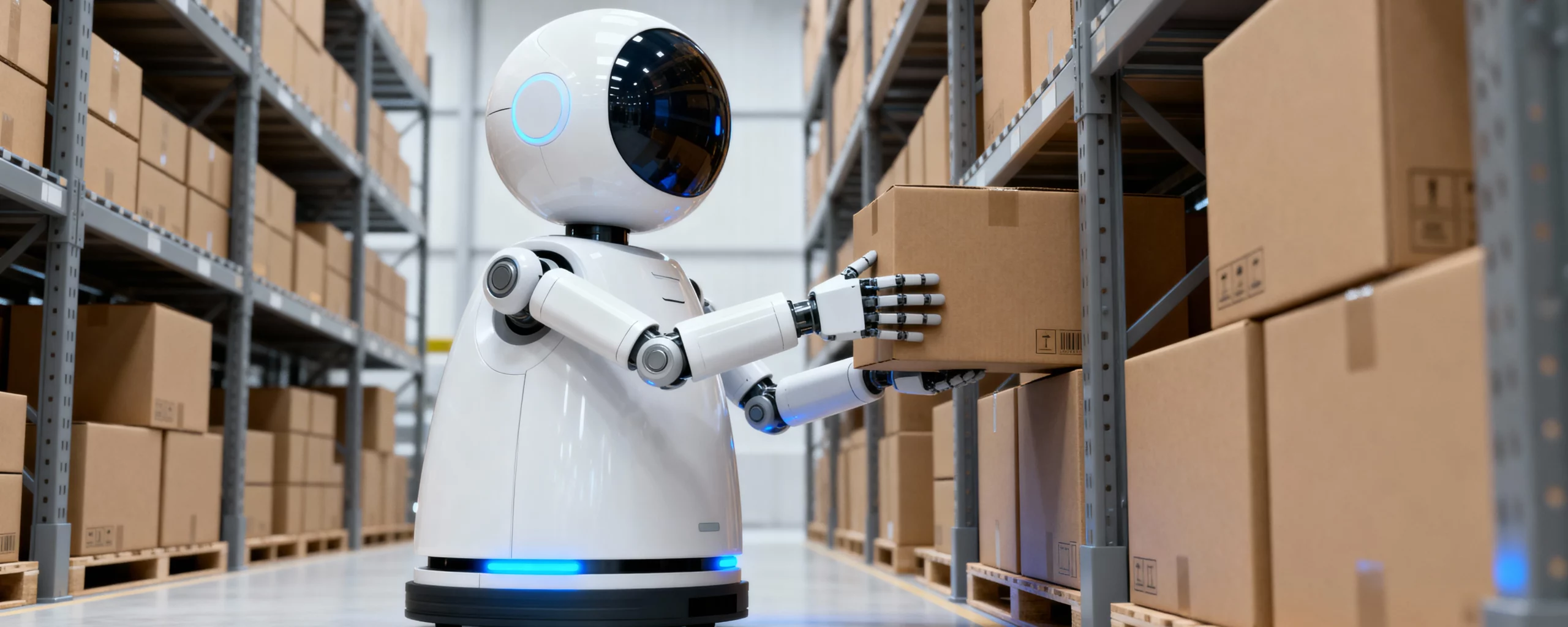
Logistics companies face an uphill task. Operational challenges rise from increasing fuel costs, driver shortages, and sky-high customer expectations. Manual coordination eats up hours. Delayed shipments frustrate customers. Costs spiral.
Finally, there’s a break: artificial intelligence. The benefits of AI in logistics aren’t theoretical—they’re delivering measurable results. Early adopters report 30% operational cost reductions, 22% faster transit times, and 60% fewer customer service calls.
These aren’t incremental improvements. They’re transformational shifts separating market leaders from those struggling to keep pace. For entrepreneurs and logistics managers, understanding these benefits isn’t optional—it’s essential for survival.
What Makes AI Essential for Modern Logistics
The logistics industry stands at a digital crossroads. Traditional methods—spreadsheets, phone calls, manual tracking—can’t handle modern supply chain complexity. Companies managing thousands of daily shipments need technology that processes information faster than humanly possible.
AI analyzes thousands of data points in seconds, identifying patterns invisible to manual review. Route optimization that takes planners hours happens in moments. Exception detection becomes automated.
The global AI in logistics sector reached $24.19 billion in 2024 and projects explosive growth to $742.37 billion by 2034. That’s a 40.88% compound annual growth rate.
Key drivers accelerating AI adoption:
- E-commerce growth demanding faster deliveries
- Labor shortages forcing automation
- Customer expectations for real-time visibility
- Competitive pressure from early adopters
- Cost inflation requiring efficiency gains
| Metric | Value | Timeframe |
| Current Market Size | $24.19 billion | 2024 |
| Projected Market Size | $742.37 billion | 2034 |
| Growth Rate (CAGR) | 40.88% | 2024-2034 |
| Companies Using AI | 38% | Current |
| Predicted AI Decision Automation | 95% | 2025 |
Companies implementing AI workflow optimization see concrete improvements across transportation, warehousing, and customer service. The technology handles repetitive tasks, predicts disruptions, and optimizes routes.
Cost Reduction Through Intelligent Automation
The most immediate benefit of AI in logistics shows up on the bottom line. Companies report operational cost reductions between 15% and 30% after implementation. These savings come from multiple sources working simultaneously.
Labor costs drop dramatically when AI handles routine inquiries. One semiconductor logistics operation reduced manual work from 3-4 hours daily to minutes by automating shipment monitoring. Customer service teams see similar gains—AI-powered chatbots resolve 60% of tracking inquiries.
Where AI delivers the biggest cost savings:
- Customer service automation reduces headcount needs by 60%
- Route optimization cuts fuel expenses by 15%
- Predictive maintenance prevents costly equipment failures
- Inventory optimization frees capital tied in excess stock
Fuel and transportation expenses decline through route optimization. AI analyzes traffic patterns, weather conditions, and delivery constraints in real-time. Companies using these systems report 15% decreases in shipping costs and 22% improvements in transit times.
| Cost Category | Traditional Method | AI-Powered Approach | Savings |
| Customer Service Labor | High call volume, manual responses | 60% automated via chatbots | 60% reduction |
| Warehouse Operations | Manual picking, layout planning | AI-optimized routes, layouts | 30% productivity gain |
| Transportation | Static routing, reactive adjustments | Dynamic route optimization | 15% cost decrease |
| Inventory Holding | Safety stock buffers | Predictive analytics | 35% stock reduction |
| Manual Coordination | 3-4 hours daily tasks | Automated exception management | 95% time savings |
Inventory management becomes precision work. AI forecasting reduces inventory levels by 35% while boosting service levels by 65%, according to McKinsey research. For small businesses leveraging AI tools, these savings mean the difference between profitable growth and stagnation.
Predictive Analytics That Transform Decision-Making
AI’s predictive capabilities fundamentally change how logistics companies operate. Instead of reacting to problems, managers anticipate them days in advance. This shift from reactive to proactive management creates competitive advantages traditional systems can’t match.
Demand forecasting accuracy improves dramatically. Traditional methods rely on historical data and human intuition. AI incorporates weather patterns, market trends, seasonal fluctuations, and geopolitical events. Forecasting errors drop 20% to 50%, eliminating costly stockouts and overstock scenarios.
Predictive capabilities transforming logistics operations:
- Demand forecasting reduces errors by 20-50%
- Equipment failure prediction cuts downtime significantly
- Delivery delay alerts provide 7-day advance warning
- Inventory shortfall detection prevents stockouts
- Customer churn prediction enables proactive retention
- Seasonal demand modeling optimizes staffing
Risk detection happens proactively. AI systems monitor thousands of suppliers, analyzing 10,000+ risk signals daily. One major company’s AI provided early warning for 85% of supply disruptions in 2024, with an average seven-day lead time before impacts materialized.
Customer experience benefits directly from prediction accuracy. AI anticipates delivery issues and proactively notifies customers with alternative solutions. This transforms customer service from damage control into relationship building. The future of marketing automation connects here—predictive insights enable personalized communication at scale.
Solving Critical Logistics Challenges
AI tackles the industry’s most persistent headaches with surgical precision. Each challenge gets a targeted solution backed by measurable results.
Last-mile delivery—the final leg from distribution center to customer—consumes over 53% of total delivery costs. AI optimizes this segment by analyzing delivery locations, vehicle capacities, and real-time traffic. Dynamic routing reduces empty miles by 45%.
Critical challenges AI solves effectively:
- Last-mile costs reduced through dynamic route optimization
- Customer inquiry overload automated via intelligent chatbots
- Warehouse space utilization improved with AI layout planning
- Delivery delays prevented through predictive traffic analysis
Inventory management shifts from art to science. AI continuously monitors stock levels, predicts demand surges, and automates reordering. Exception handling becomes proactive. AI flags at-risk shipments days in advance based on weather forecasts and carrier performance data.
| Logistics Challenge | Traditional Approach | AI-Powered Solution | Measurable Result |
| High customer service costs | Manual inquiry handling | Automated tracking updates | 60% call reduction |
| Unpredictable delivery delays | Reactive problem-solving | Predictive disruption alerts | 85% advance warning |
| Manual coordination overhead | Phone calls, emails, spreadsheets | Intelligent appointment scheduling | 3+ hours saved daily |
| Rising fuel expenses | Static routes | Real-time route optimization | 15% cost savings |
| Inventory imbalances | Safety stock buffers | Demand forecasting analytics | 35% stock reduction |
| Equipment downtime | Reactive maintenance | Predictive failure detection | 50% downtime reduction |
| Document processing | Manual data entry | Automated extraction/validation | 60% faster processing |
Warehouse operations experience transformation. AI-powered robots handle picking, packing, and sorting with greater speed and accuracy. One logistics provider boosted warehouse productivity by 30% through AI optimization.
Real-World Results: How Companies Benefit
The data moves from promising to proven when examining actual implementations. Companies across logistics subsectors report consistent gains.
Route optimization delivers immediate returns. AI platforms analyzing 2,000+ global shipping routes daily achieve 22% reductions in transit times and 15% decreases in shipping costs.
Measurable improvements companies see:
- Automated picking systems increase throughput 30%
- Predictive maintenance reduces equipment downtime 50%
- Real-time inventory visibility prevents stockouts
Customer service automation frees substantial resources. AI handles shipment tracking inquiries and exception notifications across phone, SMS, email, and chat. Companies report 60% reductions in customer service call volume.
Transportation management becomes smarter. AI predicts shipment ETAs, enabling better carrier selection. Empty miles decrease as AI matches available capacity with shipping needs. Companies implementing AI automation tools report improved employee satisfaction.
How Isometrik AI Powers Logistics Innovation
Logistics companies need AI solutions built specifically for their operational realities—not generic chatbots repurposed for shipping. Isometrik AI delivers logistics-focused automation that addresses industry challenges with purpose-built tools.
The platform handles 24/7 customer communication without human intervention. Conversational AI responds to tracking inquiries, provides delivery ETAs, sends exception notifications, and confirms proof of delivery. Companies using this system reduce customer service calls by 60%.
Core capabilities driving logistics transformation:
- Automated shipment tracking and customer updates 24/7
- Proactive delivery notifications for exceptions
- Intelligent pickup scheduling with automated confirmations
- Exception detection with immediate customer alerts
- Multilingual support across 100+ languages
Proactive exception management transforms reactive firefighting into strategic problem prevention. The AI Agent Builder continuously monitors shipments for delays, damages, or issues. It automatically notifies customers, suggests alternatives, and escalates critical problems to operations teams.
Intelligent pickup and delivery coordination eliminates scheduling bottlenecks. Conversational AI automates appointment scheduling, confirms availability, provides time windows, and handles rescheduling. This optimization consolidates stops and reduces empty miles by 25%.
The system integrates seamlessly with existing TMS and WMS platforms—McLeod, TMW, Oracle, SAP, Manhattan, and others. Companies deploy Isometrik AI in 6-8 weeks and achieve 30% operational cost reductions without replacing existing infrastructure.
Moving Forward with AI in Logistics
The benefits of AI in logistics extend beyond cost savings into strategic advantages that compound over time. Companies gain predictive capabilities that transform reactive operations into proactive strategies. Customer experience improves through faster responses and personalized service.
The market momentum validates this direction. With 38% of logistics companies already using AI and projections showing 95% of decisions automated by 2025, early adoption creates competitive moats. Companies implementing these systems today establish operational advantages late adopters struggle to match.
Strategic advantages AI creates:
- Operational efficiency competitors can’t match manually
- Customer service quality that builds loyalty
- Cost structures enabling competitive pricing
- Scalability without proportional headcount increases
- Data insights informing better strategic decisions
- Risk mitigation preventing costly disruptions
The transformation requires commitment. Successful implementations begin with clear problem identification, proceed through thoughtful system selection, and succeed through proper employee training. Organizations viewing AI as augmentation rather than replacement see the strongest results.
For logistics companies evaluating options, the question shifts from “Should we adopt AI?” to “How quickly can we implement?” The benefits—30% cost reductions, 35% inventory improvements, 60% service gains—speak clearly. Companies delaying this transition sacrifice margin, market share, and momentum to competitors already reaping these rewards.