Logistics Workflow Automation: Transform Operations and Cut Costs by 30%

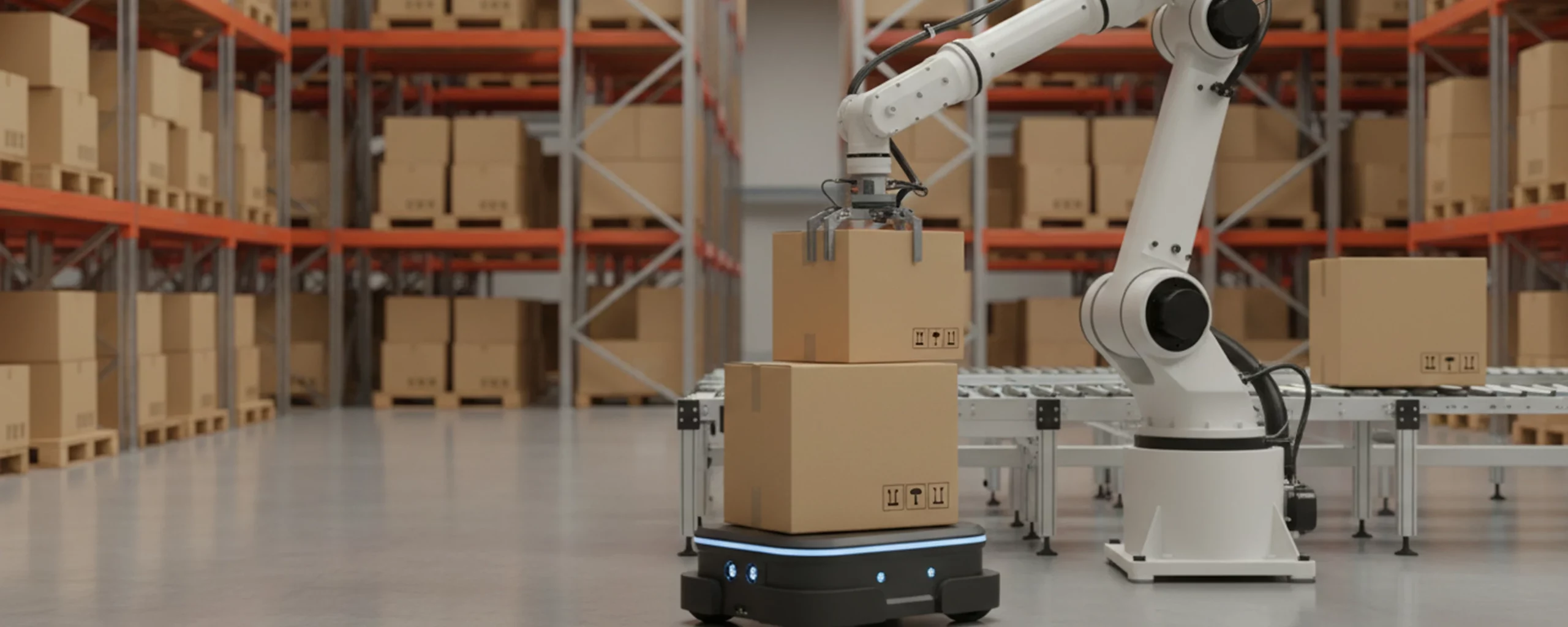
Logistics companies face a plethora of challenges: razor-thin margins, driver shortages, and customers demanding real-time tracking. The logistics automation market hit $35.14 billion in 2024 and should reach $52.53 billion by 2029, at 8.4% annual growth.
Companies implementing logistics workflow automation report 28% cost reductions and 57% fewer customer service calls within the first year.
Logistics workflow automation uses AI and intelligent systems to handle: order processing, inventory tracking, transportation scheduling, and customer communications, tasks that traditionally required manual intervention
When weather delays a shipment, the system automatically reroutes, updates customers, and adjusts downstream schedules without human oversight.
Why Manual Logistics Workflows Drain Your Profits
Traditional logistics operations rely on phone calls, emails, and spreadsheets to coordinate shipments. Coordinating pickups requires back-and-forth calls between dispatchers, drivers, and customers. Invoice processing involves manual data entry across multiple systems. Tracking inquiries consume 41% of customer service time.
Paper-based workflows increase error rates by 40-63% compared to automated systems. Wrong addresses delay deliveries. Incorrect inventory counts trigger emergency shipments. Each mistake compounds into service failures and eroded margins.
Without real-time tracking, problems surface only when customers call asking “where’s my shipment?” 54% of businesses lack supply chain visibility, forcing teams to operate blind. Warehousing reports 46% understaffing while transportation faces 51% shortfalls.
| Manual Process | Time Cost | Error Rate | Scalability |
| Customer inquiries | 15 min per call | 8-12% | Requires proportional staffing |
| Route planning | 2-4 hours daily | 15-20% | Limited by planner capacity |
| Inventory tracking | 6-8 hours weekly | 10-15% | Manual counts slow operations |
Five minutes wasted per shipment across 1,000 daily shipments equals 83 hours of lost productivity weekly. At $25 per hour, that’s over $100,000 annually in a single inefficiency.
Core Technologies Powering Logistics Workflow Automation
Three technology categories work together to create intelligent logistics systems.
Robotic Process Automation
RPA handles repetitive digital tasks. RPA bots log into systems, extract data, complete forms, and update records instantly. Invoice processing that took 30 minutes drops to 30 seconds. Thirty-one percent of organizations use RPA, making it the most widely adopted automation technology.
Artificial Intelligence & Machine Learning
AI and Machine learning brings decision-making capabilities. Machine learning algorithms analyze patterns to predict future outcomes. Demand forecasting anticipates inventory needs weeks in advance. Dynamic routing adjusts to real-time traffic and weather conditions. AI adoption in logistics rose from 74% in 2024 to projected 94% by 2029.
Natural language processing enables conversational AI to handle customer inquiries via phone, email, SMS, and chat. These systems resolve 67-78% of routine questions without human intervention.
Internet of Things Provides Visibility
Iot provides visibillity via sensors on trucks, containers, and warehouse equipment continuously transmit location, temperature, and movement data. GPS tracking enables precise delivery windows. Temperature monitors alert teams to cold chain violations. Geofencing automatically updates shipment status as trucks cross checkpoints.
Integration capabilities tie everything together. Modern platforms connect TMS, WMS, and ERP systems through APIs, allowing data to flow seamlessly. Information entered once propagates everywhere, eliminating manual data transfers.
Proven Benefits Driving Automation Adoption
Companies implementing comprehensive automation report measurable improvements across operations, finances, and customer satisfaction.
Operational efficiency improves by 32-45% within the first year. Automated order processing eliminates manual data entry and reduces fulfillment time from hours to minutes. Route optimization cuts empty miles by 25%. Warehouse automation speeds picking operations while maintaining accuracy above 99.5%.
Cost reduction averages 30% across multiple areas. Labor costs drop as automation handles routine tasks. Error rates falling to near-zero eliminate costly corrections and reshipments. Optimized routing reduces fuel consumption by 15-20%. Better inventory management decreases carrying costs.
| Cost Category | Manual Baseline | Automated Performance | Savings |
| Customer service | 40% time on inquiries | 10% time on inquiries | 75% reduction |
| Route planning | 15-20% waste | 5-8% waste | 40-60% improvement |
| Order accuracy | 8-12% error rate | <1% error rate | 90% error reduction |
Customer satisfaction increases through faster, more reliable service. Real-time tracking updates eliminate “where’s my order” anxiety. Companies report 20-34% fewer customer service inquiries as transparency improves. On-time delivery rates improve from 85-88% to 95-97%.
Data-driven decision-making replaces gut instincts. Analytics dashboards provide instant visibility into delivery times, costs per shipment, and capacity utilization. Predictive analytics forecasts demand spikes, allowing proactive capacity planning.
Implementation Roadmap for Logistics Automation
Successful logistics workflow automation follows a structured approach minimizing disruption while maximizing early wins.
Phase One: Assessment and Planning
Document current workflows and identify high-impact automation candidates. Prioritize processes that consume significant time, involve multiple systems, or generate frequent errors. Customer service inquiries, order processing, and shipment tracking typically offer quickest ROI. Establish baseline metrics before implementation.
Phase Two: Pilot Programs
Select one high-value workflow for initial deployment—often customer service automation or shipment tracking. Configure the system to handle that specific workflow end-to-end. Run parallel operations during the pilot. Monitor closely for two weeks, gathering feedback from frontline teams.
Phase Three: Scale Proven Solutions
Once pilot metrics confirm success—typically 30-50% efficiency gains—expand deployment across operations. Roll out in stages rather than switching everything overnight. Invest in training so teams understand how automation enhances their work.
Phase Four: Continuous Improvement
Review performance metrics monthly. As operations evolve, workflows require updates. Layer on advanced capabilities like predictive analytics and AI-powered route optimization.
| Implementation Phase | Timeline | Key Activities | Success Metrics |
| Assessment | 1-2 weeks | Workflow mapping, ROI analysis | Baseline metrics established |
| Pilot Deployment | 3-8 weeks | System configuration, testing | 30-50% efficiency gains |
| Full Rollout | 9-12 weeks | Staged expansion, training | Organization-wide adoption |
| Optimization | Ongoing | Performance monitoring, enhancements | Sustained improvements |
Real-World Applications Across Logistics Operations
Customer service automation cuts inquiry volumes by 60%.
Conversational AI handles “where’s my shipment” questions via phone, SMS, email, and chat—instantly providing tracking updates and delivery ETAs. Companies using AI workflow optimization report 73% reduction in customer service time spent on tracking inquiries.
Shipment coordination automation eliminates scheduling bottlenecks.
Pickup and delivery appointment scheduling runs autonomously—confirming availability with customers, providing time windows, and sending reminders. The system optimizes driver routes by consolidating stops, reducing empty miles by 24%.
Exception management transforms reactive firefighting into proactive prevention.
Automated systems monitor shipments for delays or damages. When problems occur, they notify customers immediately and escalate critical issues to operations teams. This early warning catches disruptions before they impact service commitments.
Document processing automation eliminates manual data entry.
Optical character recognition extracts information from bills of lading, delivery receipts, and invoices. One logistics provider processing 100,000 documents a month reduced manual work by 68%.
Inventory management automation optimizes stock levels.
Predictive analytics forecast demand based on historical patterns. Automated replenishment triggers orders when inventory falls below thresholds, preventing stockouts without excessive carrying costs.
Overcoming Common Implementation Challenges
Integration complexity
Prioritize platforms with robust API capabilities and pre-built connectors for major logistics systems. Budget 40-50% of project timeline for connecting systems and testing data flows.
Change management
Communicate how automation eliminates tedious tasks so people focus on problem-solving. Involve frontline teams in workflow design. Provide hands-on training before launch.
Data quality issues
Audit data quality before implementation. Standardize formats, deduplicate records, and establish governance processes. Implement validation rules that prevent poor data from entering systems.
Cost concerns
Calculate total cost of current manual processes and compare against automation costs amortized over 3-5 years. Most logistics workflow automation achieves positive ROI within 12-18 months. Start with focused pilots demonstrating quick wins.
Partner with Isometrik AI for Logistics Transformation
Isometrik AI delivers logistics-specific automation proven across transport management, warehouse operations, and customer communications. Our platform integrates seamlessly with major TMS and WMS systems—McLeod, TMW, Oracle TM, SAP, Manhattan Associates.
Deployment happens in 6-8 weeks, not 6-12 months. Pre-built agents for shipment tracking, customer communication, pickup coordination, and exception management accelerate implementation. Security and compliance come standard with SOC2 certification and BYOK encryption.
Companies using Isometrik AI automate customer communication, optimize coordination, and scale operations profitably. Book your free logistics AI consultation or explore our AI in Logistics solutions. If you’re ready to transform repetitive tasks into strategic advantages, discover more about getting started with AI automation tools.