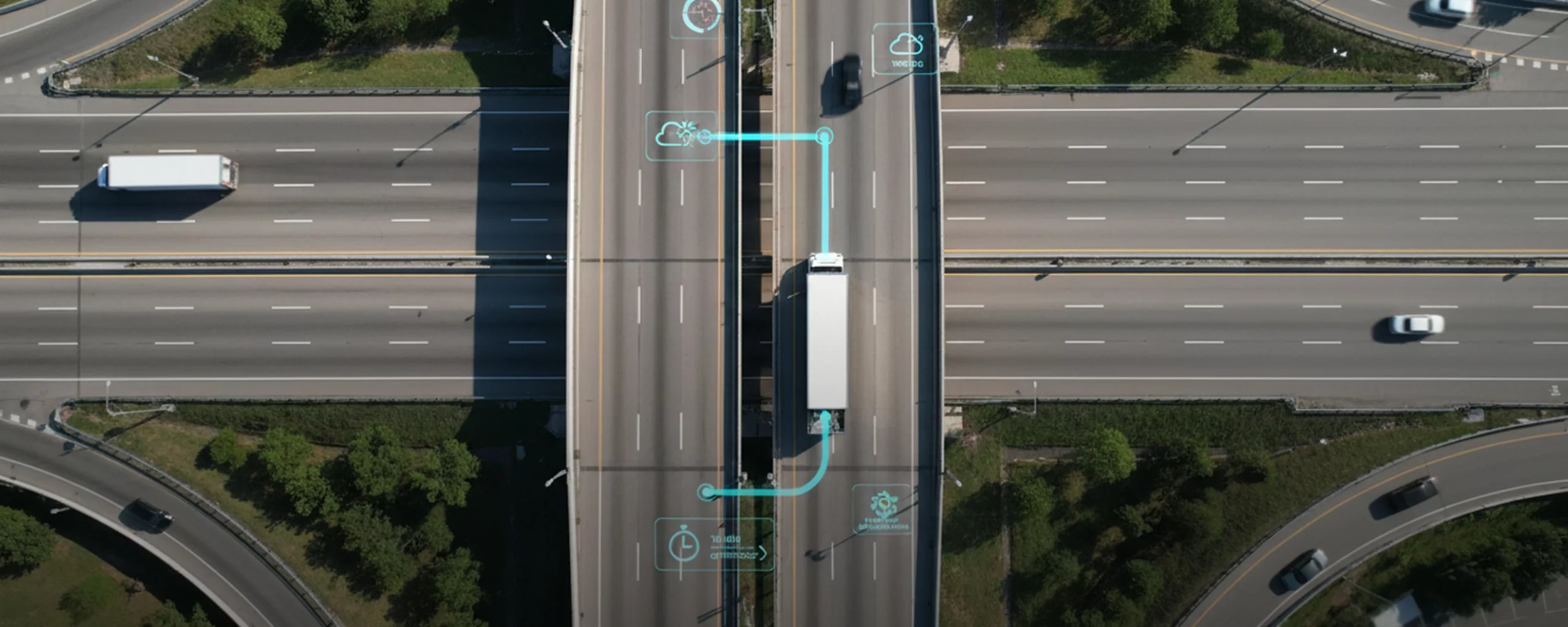
Supply Chain Automation: Cut Costs by 30% in 2026

Supply chain automation has become the difference between thriving logistics companies and those struggling to keep up. The logistics automation market is exploding from $88.09 billion in 2025 to $212.81 billion by 2032. Smart entrepreneurs are leveraging these technologies to slash costs, eliminate bottlenecks, and outpace competitors who still rely on manual processes.
The logistics industry faces a plethora of issues such as, driver shortages, rising fuel costs, and customer demands for faster delivery create a perfect storm. Traditional manual processes can’t scale fast enough.
Companies implementing supply chain automation report cutting operational costs by 30% while boosting productivity by 50%. These aren’t marginal gains—they’re transformational results that separate market leaders from the pack.
What Is Supply Chain Automation and Why It Matters in 2026
Supply chain automation uses advanced technologies like AI, robotics, and ML to streamline logistics operations. Instead of relying on manual data entry, phone calls, and spreadsheets, automated systems handle everything from inventory tracking to route optimization. This eliminates human error while processing tasks at speeds impossible for manual workflows.
Around 50% of large companies worldwide now use AI, advanced analytics, and IoT in their supply chains. Early adopters report logistics costs dropping by 15%, inventory levels falling by 35%, and service efficiency improving by 65%.
Key reasons supply chain automation matters for entrepreneurs:
- Market pressure: Customer expectations for same-day or next-day delivery continue rising
- Labor shortage: 90,000+ driver shortages in key markets make manual operations unsustainable
- Cost efficiency: Automated systems process hundreds of transactions at fraction of manual cost
- Competitive edge: Companies without automation fall behind competitors who deploy faster
- Scalability: Technology handles volume spikes without proportional staff increases
Traditional vs. Automated Supply Chain Comparison
| Aspect | Traditional Process | Automated Process | Impact |
| Order Processing | Manual entry, 2-4 hours | Automated, 5 minutes | 95% faster |
| Customer Inquiries | Phone/email, hours wait | AI chatbot, instant | 60% cost reduction |
| Route Planning | Manual analysis, daily | AI optimization, real-time | 25% cost savings |
| Exception Handling | Reactive, 24-48 hours | Proactive alerts, immediate | 40% fewer disruptions |
For entrepreneurs and growing businesses, automation levels the playing field. You don’t need a massive IT department or unlimited budget. Modern solutions deploy in 6-8 weeks and integrate with existing systems.
Core Technologies Driving Supply Chain Automation
AI powers predictive analytics that forecast demand patterns and identify potential disruptions. ML algorithms analyze historical data to optimize inventory levels and prevent stockouts. These systems learn from every transaction, continuously improving accuracy and efficiency.
Robotic Process Automation handles repetitive digital tasks. RPA bots process orders, update tracking systems, and send customer notifications without human intervention. About 53% of organizations have implemented RPA, with another 19% planning adoption soon. The technology works 24/7 without breaks, ensuring consistent performance.
Core automation technologies transforming logistics:
- AI and Machine Learning: Demand forecasting, route optimization, predictive maintenance capabilities
- Robotic Process Automation: Order processing, data entry, customer notifications, system updates
- Internet of Things: Real-time tracking, condition monitoring, automated inventory counts
- Transportation Management Systems: Route selection, carrier optimization, real-time rerouting
- Warehouse Management Systems: Inventory coordination, order fulfillment, storage optimization
- Conversational AI: Customer service automation, exception handling, 24/7 communication support
Internet of Things devices provide real-time tracking and monitoring capabilities. Connected sensors track shipment location, temperature, and condition throughout the journey. Fleet managers monitor vehicle performance and schedule predictive maintenance before breakdowns occur. Warehouse operations use IoT to automate inventory counts and reordering processes.
Transportation Management Systems revolutionize shipping and delivery operations. These platforms analyze traffic patterns, fuel costs, and delivery windows to select optimal routes automatically. When disruptions occur, TMS systems reroute shipments instantly to avoid delays.
Measurable Business Benefits for Growing Companies
Cost reduction stands out as the primary driver for automation adoption. Companies eliminate redundant manual tasks that consume employee hours. Automated systems process hundreds of transactions simultaneously at fraction of the cost.
Accuracy improvements deliver immediate financial impact. Human error in logistics costs businesses thousands per incident. Automated systems achieve accuracy rates above 99.5% compared to human rates between 95-98%. Fewer errors mean reduced customer complaints, fewer returns, and lower correction costs.
Immediate benefits entrepreneurs experience with supply chain automation:
- 30% operational cost reduction through eliminated manual tasks and improved efficiency
- 50% productivity increase as systems handle more volume without additional staff
- 60% fewer customer service calls with proactive tracking and automated updates
- 40% faster delivery times through optimized routing and real-time adjustments
- 99.5% accuracy rates eliminating costly errors that damage customer relationships
- 24/7 operations with systems working continuously without breaks or overtime costs
ROI Timeline & Expected Returns
| Timeframe | Investment Focus | Expected Returns | Key Metrics |
| 0-3 Months | System deployment, integration | 15-20% efficiency gain | Faster processing |
| 3-6 Months | Optimization, training | 25-30% cost reduction | Lower labor costs |
| 6-12 Months | Full automation rollout | 40-50% productivity boost | Higher throughput |
| 12-18 Months | Complete ROI realization | 60% cost advantage | Sustained savings |
Speed and efficiency gains compound over time. Automated quote generation that once took hours now completes in seconds. Customer service inquiries receive instant responses instead of waiting 24-48 hours. Faster processing enables businesses to handle more volume without proportional staff increases.
Real-time visibility transforms decision-making capabilities. Automated tracking provides complete transparency across the entire supply chain. Managers access current inventory levels, shipment status, and potential bottlenecks instantly.
Supply Chain Automation Implementation Roadmap
Start by assessing current pain points and identifying automation opportunities. Map existing workflows to find bottlenecks where manual processes slow operations. Calculate time spent on repetitive tasks like data entry, customer inquiries, and tracking updates. These areas deliver the quickest automation wins.
Choose scalable solutions that integrate with existing systems. Avoid rip-and-replace implementations that disrupt operations. Modern automation platforms connect directly with current TMS, WMS, and ERP systems. Integration should enhance workflows without requiring complete system overhauls.
Step-by-step implementation roadmap for logistics automation:
- Assessment phase: Identify bottlenecks, map workflows, calculate time spent on manual tasks
- Solution selection: Choose platforms with proven TMS/WMS integration and rapid deployment
- Pilot program: Test with limited customers or routes to validate effectiveness
- Workflow configuration: Customize tracking, communication, and exception management processes
- Team training: Educate staff on new systems and address change management concerns
- Full deployment: Roll out across all operations with continuous monitoring
- Optimization cycle: Monthly reviews to refine workflows and expand capabilities
Launch a pilot program with a subset of customers or routes. Test automated tracking, customer communication, and exception management on limited scale. Monitor performance metrics closely and gather feedback from both customers and staff. Use real-world results to refine workflows before full deployment.
Isometrik AI specializes in rapid deployment for logistics operations. Their pre-built automation solutions launch in 6-8 weeks instead of the typical 6+ month development cycle. The platform handles shipment tracking, pickup coordination, exception management, and customer communication automatically with seamless TMS integration for real-time data access.
Common Challenges and How to Overcome Them
Integration complexity ranks as the top concern for businesses considering automation. Legacy systems often lack modern APIs or require custom connectors. Partner with providers who specialize in logistics integrations and offer proven connectivity solutions. Isometrik’s platform integrates seamlessly with major TMS, WMS, and ERP systems without disrupting existing workflows.
Initial investment costs can seem daunting for growing businesses. However, focusing on total cost of ownership reveals the true value. Calculate savings from reduced labor, fewer errors, and improved efficiency. Most companies achieve ROI within 6-18 months through operational improvements alone.
Critical success factors for automation implementation:
- Choose API-first platforms that connect with existing systems without replacement
- Start with high-impact areas like customer communication and tracking for quick wins
- Plan phased deployment to spread costs and minimize operational disruption
- Invest in training to ensure staff adoption and maximize technology benefits
- Monitor security closely with encryption, access controls, and compliance standards
- Maintain data quality through governance processes and regular audits
Implementation Challenges & Solutions
| Challenge | Common Impact | Practical Solution | Isometrik Approach |
| System Integration | Delayed launches, data silos | API-first platforms | Pre-built TMS/WMS connectors |
| Upfront Costs | Budget constraints | Phased deployment | 6-8 week rapid deployment |
| Staff Resistance | Slow adoption rates | Training and communication | Hands-on implementation support |
| Data Security | Compliance concerns | Encrypted systems, SOC2 | Enterprise-grade security built-in |
Change management requires thoughtful planning and communication. Staff may worry automation threatens their jobs. Frame automation as enhancement, not replacement. Automated systems handle repetitive tasks while freeing employees for higher-value work like customer relationships and strategic planning.
Cybersecurity risks increase with digitization. Automated systems handle sensitive customer and business data. Implement robust security measures including encryption, access controls, and regular audits. Choose providers with SOC2 compliance and proven security track records.
Future-Proofing Your Logistics with Smart Automation
Autonomous vehicles and delivery drones will revolutionize last-mile delivery. Major logistics companies already invest heavily in autonomous trucking technology. By 2035, an estimated 45% of supply chains will incorporate autonomous vehicles, drones, and automated planning systems.
Digital twin technology creates virtual replicas of entire supply chain operations. These simulations test changes, predict outcomes, and optimize processes before real-world implementation. Companies use digital twins for strategic planning, capacity analysis, and scenario testing.
Emerging trends shaping supply chain automation in 2026 and beyond:
- Autonomous trucking: AI-powered vehicles reducing human error and improving fuel efficiency
- Digital twins: Virtual replicas enabling risk-free testing and optimization scenarios
- Generative AI: Advanced systems handling complex exceptions and customer interactions
- Blockchain integration: Immutable ledgers providing end-to-end transparency and traceability
- Sustainability focus: Optimized routing cutting fuel consumption by 25% while improving speed
- Predictive analytics: Forecasting disruptions and suggesting alternatives before problems escalate
Sustainability initiatives drive automation adoption as companies seek to reduce carbon emissions. Optimized routing cuts fuel consumption by 25% while improving delivery times. Automated inventory management reduces waste through better demand forecasting.
Bottomline – Supply Chain Automation
For entrepreneurs entering logistics or scaling existing operations, automation isn’t optional anymore. Start small with high-impact areas like customer communication and tracking.
Partner with experienced providers who understand logistics-specific challenges. Isometrik AI offers both pre-built agents and custom solutions designed specifically for logistics workflows, reducing operational costs by 30% while maintaining 24/7 customer communication.
Assess where automation delivers the highest ROI for your specific situation. Schedule a strategy call with automation experts to map your implementation roadmap. The competitive advantage goes to businesses that transform operations now, not later.