White Label AI Chat Platform: Complete 2026 Buyer’s Guide

If you’re shopping for a white label AI chat platform, you’ve probably already hit the wall every agency and SaaS founder hits: building a chatbot from scratch takes months and a lot of cash, but reselling someone else’s tool feels risky if it isn’t built right.
A white label AI chat platform solves both problems. It lets you launch a fully branded AI chat product — your logo, your domain, your pricing — without writing a single line of model code.
This blog will show you what a white label AI chat platform actually is, what it costs to build versus buy, and what to check before you sign a contract. We’ll keep the lens on the US market, where demand is growing fastest, while pointing out where global buyers should pay attention too.
What Is a White Label AI Chat Platform?
A white label AI chat platform is pre-built conversational AI software that a provider develops once and licenses out for resale. You rebrand it with your company name, logo, and domain. Your clients never see the original vendor.
Think of it like a private-label product on a grocery shelf. The manufacturer builds it once; retailers slap their own label on it and sell it as their own. In AI chat, the “manufacturer” handles the natural language processing (NLP), the infrastructure, and the underlying large language model (LLM). You handle the branding, the client relationships, and the pricing.
This matters because conversational AI is no longer a nice-to-have. According to Grand View Research, the global conversational AI market is projected to reach roughly $17 to $18 billion in 2026, with multiple research firms forecasting it to climb past $40 billion by the early 2030s.
Why Demand Is Surging in 2026
Three forces are driving the rush toward white label AI chat platforms right now: rising customer expectations for instant responses, the high cost of human support staff, and the speed at which AI tooling has matured.
- 24/7 expectations. Customers expect an answer in seconds, not business hours.
- Labor costs. A single human support rep costs an employer roughly $40,000 to $60,000 a year in salary alone, before benefits and training.
- Faster deployment. Pre-built platforms cut go-live time from months to weeks.
- Proven adoption. A large share of customer-facing AI interactions in the US already run through automated systems, and that share keeps climbing.
- Agency economics. Reselling AI chat as a service typically delivers stronger gross margins than most other digital services agencies already sell.
North America currently holds roughly a third of the global conversational AI market, and according to Fortune Business Insights, the US alone is on pace for around $4 billion in conversational AI spend in 2026.
That’s a deep, well-funded buyer base for agencies and SaaS companies entering this space. Globally, Asia-Pacific is the fastest-growing region, so providers eyeing international clients shouldn’t ignore that demand curve either.
Build vs. Buy: What It Actually Costs
This is the question every founder asks first, and it deserves a straight answer instead of a scare number. Building a custom AI chatbot with real NLP and integrations is not a $500 side project, but it’s also not always a half-million-dollar enterprise build.
Based on current chatbot development cost data, the right comparison depends on what “production-ready” means for your use case.
| Cost Factor | Build In-House | Buy a White Label Platform |
| Typical upfront cost | $15,000–$150,000 for an AI-powered bot with NLP and CRM integration | $0–$1,500 setup; often included in onboarding |
| Monthly cost | Ongoing engineering, hosting, and maintenance costs (commonly 20–30% of build cost per year) | $99–$600/month for agency-tier reseller plans |
| Time to first client live | 8–16 weeks for a custom build | Hours to a few weeks |
| Who owns the IP | You, fully | Varies by vendor; check the contract |
| Typical gross margin for resellers | N/A (you’re the end user) | 60–80% reported across agency case studies |
The build path makes sense if you have specific compliance needs, a large existing engineering team, or a long-term plan to own every layer of the stack. For most agencies and mid-market SaaS companies, buying gets you to revenue faster and lets you test demand before committing six figures.
If you do decide custom development is the right call, it helps to understand the broader trade-offs in build vs. buy AI agent decisions before locking in a direction.
What to Look for in a White Label AI Chat Platform
Not all white label AI chat platforms are built the same way, and the differences show up fast once you have real clients depending on uptime. Run every vendor through the same checklist so you’re comparing apples to apples.
- True white labeling. Confirm the vendor’s name disappears completely — in the widget, the dashboard, and any client-facing emails.
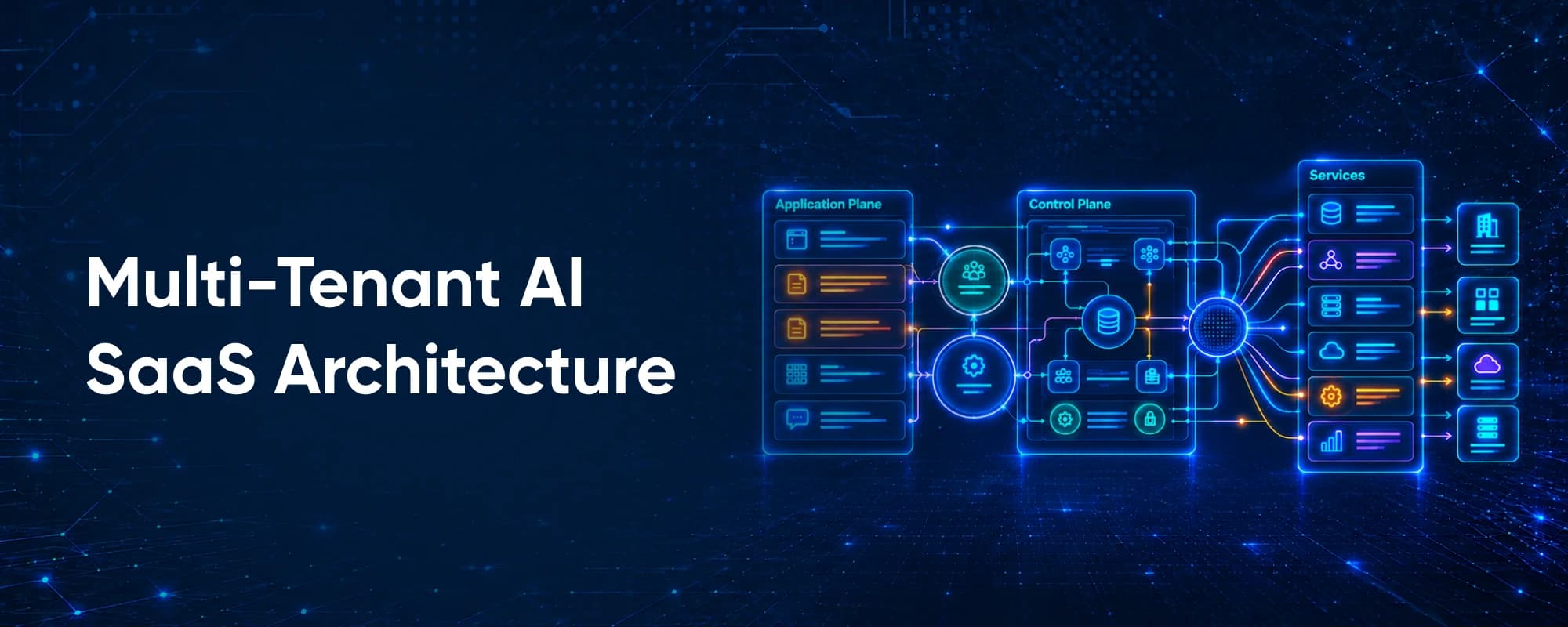
- Multi-tenant client management. You need one dashboard to manage many client accounts, not a separate login for each.
- Usage-based or tiered billing built in. Manually invoicing every client doesn’t scale past a handful of accounts.
- Knowledge base and RAG support. Retrieval-augmented generation lets the bot answer from a client’s actual documents instead of generic responses.
- Compliance posture. Look for SOC 2 or GDPR readiness, especially if you’ll serve healthcare, finance, or legal clients.
- Integration depth. Check support for the CRMs and helpdesks your clients already use, like Salesforce, HubSpot, or Zendesk.
- Escalation to a human. The platform should hand off complex conversations smoothly, with context intact.
| Evaluation Criteria | Why It Matters | Red Flag to Watch For |
| Brand removal | Clients should never see the underlying vendor | “Powered by” tags that can’t be removed |
| Billing flexibility | You need to set your own prices and terms | Vendor dictates your client pricing |
| Data ownership | You may need to migrate or audit data later | Vague terms on data export rights |
| Support response time | Outages hit your reputation, not the vendor’s | No SLA or guaranteed response window |
A no-code AI agent platform can also be a useful comparison point if your team wants to customize conversation flows without a developer on every ticket.
Common Pitfalls Agencies Run Into
Agencies that jump into white label AI chat without a clear operating plan tend to hit the same handful of walls, and they hit them fast once client count grows past two or three.
The most common one is the “duct-taped stack” problem: stitching together a chatbot builder, a separate automation tool, and a manual Stripe invoice process. It works for one client. It breaks down by the fourth or fifth, because every new account means copying logins, re-explaining pricing, and manually tracking who paid what.
A second pitfall is skipping usage limits. Without built-in metering, agencies either undercharge heavy users or get stuck eating overage costs themselves.
A third is weak onboarding: making clients email over API keys and credentials instead of a one-click authorization flow, which slows growth and looks unprofessional to a prospect evaluating you against other vendors.
The fix for all three is the same: pick a platform built for multi-client operations from day one, not one retrofitted from a single-user chatbot tool. If you’re earlier in the journey, our guide on launching an AI agency in 2026 walks through how to structure this before you onboard your first paying client.
Where Isometrik Fits
If you’re evaluating white label AI chat platforms because you want to launch a branded AI offering without a 12-month build cycle, this is exactly the gap Isometrik’s Conversational AI is built to close. It delivers human-like chat and voice agents that work across web chat, SMS, WhatsApp, and email, trained on your client’s own data and tone instead of generic scripts.
The platform deploys in 12 to 16 weeks, integrates with the CRMs and helpdesks agencies already use — Salesforce, HubSpot, Zendesk, and others — and includes smart escalation so complex cases land with a human, with full context attached. It’s SOC 2 and GDPR compliant out of the box, which matters the moment a client in healthcare or finance asks for proof.
For founders thinking even bigger, the AI Product Accelerator goes a step further: a path to launching your own multi-tenant AI SaaS product, not just reselling a single chatbot, complete with full source code and 50-plus pre-built features.
Conclusion: White label AI Chat Platform
A white label AI chat platform is no longer an experimental bet — it’s a proven way for agencies and SaaS companies to enter a market projected to be worth tens of billions of dollars by the early 2030s, without the cost or risk of building from scratch.
The decision isn’t whether to use one. It’s choosing a partner that gets the branding, billing, and compliance right from the start, so you can focus on signing clients instead of patching together tools. Whether you go with a lean reseller plan or a full custom AI SaaS build, get the fundamentals right before you scale past your first few clients.