Transformative AI in Manufacturing Examples: Reshaping Standards

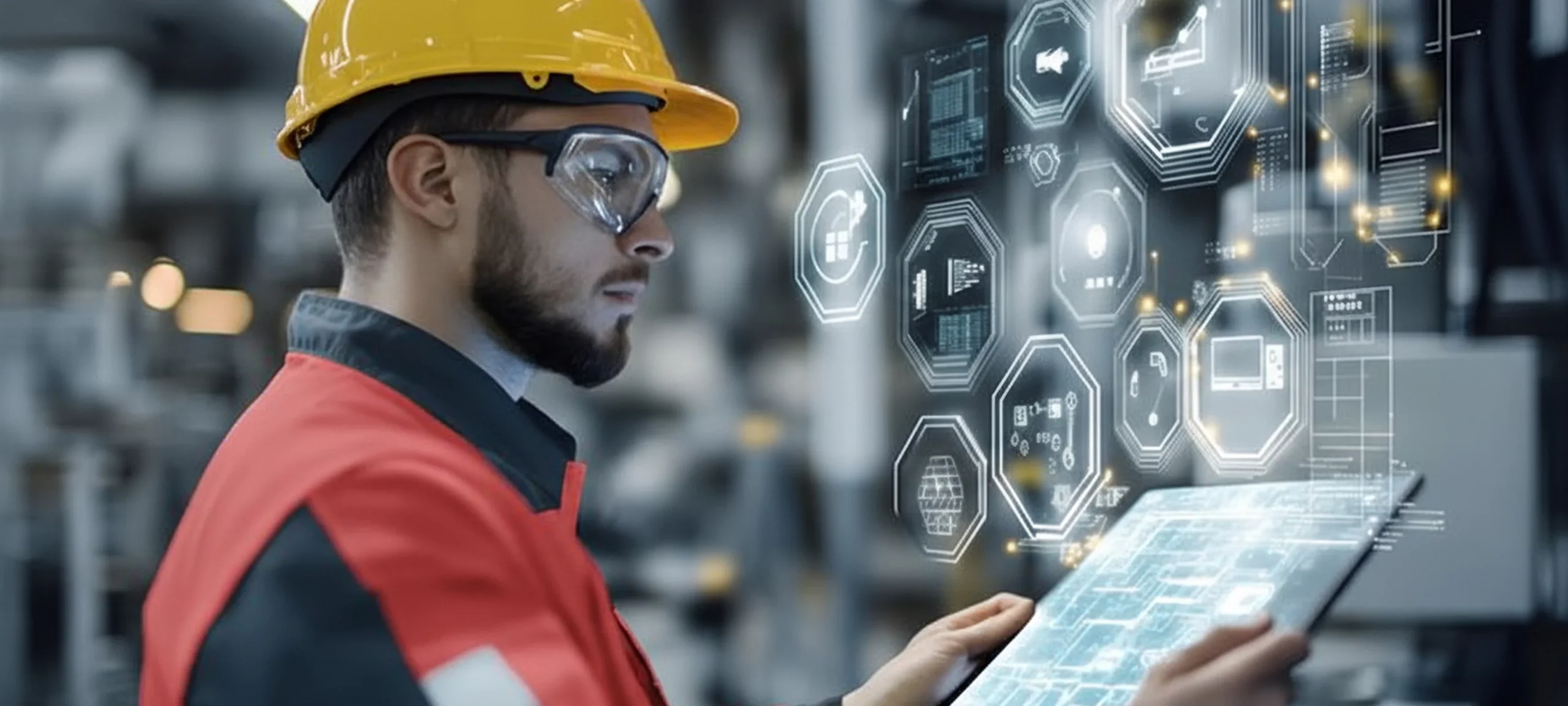
The manufacturing industry showcases the most compelling AI transformation stories across all sectors worldwide. These AI in manufacturing examples demonstrate how artificial intelligence revolutionizes production processes, reduces costs, and creates sustainable competitive advantages that reshape industrial operations fundamentally.
The market data reveals the transformative scope and impact potential:
- Global AI manufacturing market reaching $5.8 billion with explosive 35.3% CAGR projected to $155.04 billion by 2030
- Leading manufacturers report extraordinary 45-60% gains in overall equipment effectiveness through systematic AI implementation
- Advanced AI systems deliver up to 95% accuracy in predictive maintenance and quality control applications
- Industrial AI investments demonstrate proven value with measurable returns within 12-18 months
These real-world applications prove AI’s transformative potential while providing blueprints for successful implementation across diverse manufacturing environments.
Breakthrough Success Stories: AI in Manufacturing Examples
1. Stellantis’ Comprehensive AI Integration Partnership
Stellantis announced an expanded partnership with Mistral AI to integrate artificial intelligence across manufacturing, engineering, fleet data analysis, and internal operations, creating one of the most comprehensive AI in manufacturing examples.
Implementation Details:
- Large language models integrated across manufacturing workflows and operational processes
- AI-driven automation systems for production planning and optimization strategies
- Fleet data analysis capabilities for predictive maintenance and performance optimization across vehicle fleets
- Cross-functional AI deployment spanning multiple operational areas and departments throughout the organization
The implementation enables Stellantis to optimize manufacturing processes, improve engineering workflows, and enhance fleet management capabilities while maintaining operational continuity and quality standards.
2. Tata Consultancy Services’ Manufacturing AI Enablement
TCS collaborated with Salesforce to empower manufacturing and semiconductor businesses to leverage AI and cloud computing effectively, creating a scalable model for AI adoption across industrial sectors.
Implementation Details:
- AI-powered cloud computing integration for manufacturing operations and workflow optimization
- Semiconductor-specific AI applications for yield optimization and advanced quality control
- Comprehensive digital transformation frameworks designed specifically for manufacturing requirements
- Industry-specific AI solutions tailored to unique manufacturing challenges and operational needs
TCS leverages its implementation expertise combined with Salesforce’s technology platform to deliver consistent, repeatable results for manufacturing companies seeking AI transformation.
3. Ariprus Digicon’s Industrial AI Agent Development
Ikigai Capital invested $1 million in Ariprus Digicon to develop adaptable AI agents that replicate domain specialist expertise, improving automation and efficiency in manufacturing processes.
Implementation Details:
- Development of AI agents capable of replicating human expertise and complex decision-making processes
- Autonomous decision-making systems for complex manufacturing processes and operational challenges
- Adaptive learning algorithms that improve performance over time through experience and feedback
- Domain-specific knowledge integration for specialized manufacturing applications and industry requirements
The approach demonstrates how AI can preserve and scale human expertise across manufacturing operations while improving consistency and availability.
4. Siemens’ Advanced Industrial AI Ecosystem
Siemens continues leading AI in manufacturing examples through comprehensive smart manufacturing implementations leveraging computer vision, machine learning, and autonomous systems across global facilities.
Implementation Details:
- Machine learning optimization for testing procedures and quality control processes
- AI-enabled robotics for precision manufacturing and automated assembly operations
- Comprehensive data analytics platforms for real-time decision making and process optimization
- Integration across manufacturing value chains connecting suppliers, production, and distribution
The company’s approach shows how systematic AI deployment across entire manufacturing ecosystems creates sustainable competitive advantages through operational excellence.
5. NVIDIA’s AI Blueprint for Manufacturing Innovation
NVIDIA launched AI Blueprint for Manufacturing, providing reference workflows that improve production efficiency through advanced AI applications and edge computing capabilities.
Implementation Details:
- Generative AI workflows for manufacturing process optimization and intelligent automation
- Edge computing solutions for real-time decision making and immediate response capabilities
- Computer vision applications for quality control, safety monitoring, and operational oversight
- Scalable AI infrastructure for enterprise manufacturing deployments and high-volume processing
The AI Blueprint enables manufacturers to implement proven AI solutions rapidly while achieving immediate improvements in efficiency, quality, and operational performance through standardized implementation approaches. This framework reduces implementation time and risk while ensuring consistent results.
NVIDIA’s approach demonstrates how technology companies can support manufacturing transformation by providing tested, validated AI solutions that accelerate adoption.
6. Microsoft and Accenture’s Advanced AI Collaboration
Microsoft and Accenture expanded their collaboration to develop advanced generative AI-driven solutions specifically for manufacturing applications, focusing on operational optimization and cybersecurity enhancement.
Implementation Details:
- Generative AI development for manufacturing-specific applications and use cases
- Advanced cybersecurity solutions for industrial environments and operational technology protection
- Technology consolidation platforms reducing operational complexity and integration challenges
- Comprehensive AI strategy development and implementation support for manufacturing clients
The alliance provides manufacturers with enterprise-grade AI solutions that address both operational efficiency and security requirements simultaneously.
7. Chinese Manufacturing AI Initiative Acceleration
China’s “AI Plus” initiative launched and expanded to promote AI development across manufacturing industries, with projected investments of approximately $128 billion in AI technologies.
Implementation Details:
- Government-supported AI integration across manufacturing sectors and industrial applications
- “Made in China 2025” digitalization and modernization programs supporting comprehensive transformation
- AI research promotion for practical manufacturing applications and industry-specific solutions
- Business incentives for AI adoption across industrial operations and supply chain integration
The initiative accelerates AI adoption across Chinese manufacturing, focusing on electronics, automotive, and consumer goods production while creating significant competitive advantages through systematic AI integration supported by government investment and policy frameworks.
This comprehensive approach demonstrates how national-level AI strategies can transform entire manufacturing sectors through coordinated investment and supportive policies.
8. Industrial Leaders’ Predictive Maintenance Excellence
Multiple manufacturing leaders achieved remarkable results through AI-powered predictive maintenance implementations, representing 25% of the AI manufacturing market with 95% accuracy in failure prediction.
Implementation Details:
- Comprehensive sensor networks monitoring equipment health continuously across all critical machinery
- Machine learning algorithms analyzing vibration, thermal, and acoustic data for predictive insights
- Automated maintenance scheduling based on predictive analytics and operational requirements
- Integration with enterprise systems including ERP and maintenance management platforms
Results Achieved: Leading implementations achieve transformative operational improvements:
- 50% reduction in unplanned downtime through early failure detection and proactive intervention
- 30% decrease in maintenance costs via optimized scheduling and resource allocation
- 25% increase in equipment lifespan through intelligent maintenance timing and preventive care
These results demonstrate how AI-powered predictive maintenance creates substantial competitive advantages through improved reliability and reduced operational costs.
9. Semiconductor Industry AI Quality Control Revolution
The semiconductor and electronics segment holds the highest market share in AI manufacturing applications, driven by precision requirements and yield optimization needs through advanced AI systems.
Implementation Details:
- Computer vision systems for defect detection at nanometer scales with unprecedented accuracy
- Machine learning algorithms optimizing fabrication process parameters in real-time
- Real-time quality monitoring and automatic process adjustment capabilities
- Yield prediction and optimization across complex multi-step manufacturing processes
Results Achieved: Semiconductor manufacturers achieve remarkable performance improvements:
- 15-25% yield improvements through AI-driven process optimization and quality control
- Reduced production costs via elimination of defects and process optimization
- Accelerated time-to-market for new products through improved manufacturing efficiency
These improvements provide substantial competitive advantages in industries where precision and efficiency directly impact profitability and market position.
10. Smart Factory Ecosystem Integration
Leading manufacturers deployed comprehensive smart factory solutions integrating AI across all operational systems, achieving autonomous operation for routine tasks while maintaining human oversight for strategic decisions.
Implementation Details:
- AI-powered demand forecasting and intelligent production scheduling systems
- Integrated quality management and predictive maintenance platforms working together
- Energy optimization and sustainability monitoring through intelligent consumption management
- Comprehensive data analytics and real-time decision support platforms across operations
Results Achieved: Smart factory implementations report transformative operational improvements:
- 40% improvement in operational efficiency through comprehensive AI integration across all systems
- 35% reduction in operating costs via automation and optimization across manufacturing functions
- 50% faster response to market changes through intelligent demand forecasting and production flexibility
These implementations demonstrate how systematic AI integration creates sustainable competitive advantages that are difficult for competitors to replicate.
Common Success Patterns in AI Manufacturing Examples
Data-Driven Excellence and Decision Making
These AI in manufacturing examples demonstrate shared characteristics including comprehensive data collection, real-time analysis, and autonomous decision-making capabilities across operational systems.
Success Factors:
- Comprehensive data integration from multiple sources providing complete operational visibility
- Real-time processing capabilities enabling immediate response to changing conditions
- Quality data management ensuring accuracy and reliability of AI insights
- Continuous optimization improving performance based on operational feedback
Successful implementations invest heavily in data infrastructure, quality management, and governance systems that support advanced AI applications across manufacturing operations while maintaining security and compliance.
Systematic Implementation Approaches
Most successful AI in manufacturing examples follow systematic implementation approaches building capabilities incrementally while proving value through pilot projects before scaling to enterprise-wide transformation.
Implementation Strategies:
- Pilot program success demonstrating value with manageable scope before broader deployment
- Phased scaling expanding proven applications across additional operational areas
- Performance measurement tracking both operational improvements and business impact
- Continuous refinement optimizing systems based on real-world performance data
This methodology minimizes risk while building internal expertise, stakeholder confidence, and operational capabilities necessary for comprehensive AI integration across manufacturing systems.
Human-AI Collaboration Optimization
Leading AI in manufacturing examples emphasize human-AI collaboration rather than workforce replacement, maximizing the combined potential of human creativity and AI efficiency.
Collaboration Benefits:
- Enhanced human capabilities through AI-powered insights and decision support
- Automated routine tasks freeing workers for complex problem-solving and innovation
- Improved safety outcomes through AI monitoring and hazard detection
- Knowledge preservation capturing and scaling human expertise through AI systems
This collaborative approach increases employee acceptance, improves safety outcomes, and maximizes the combined potential of human expertise and AI-powered automation systems.
Measurable Benefits Demonstrated Across Manufacturing AI Examples
Operational Excellence and Efficiency
AI in manufacturing examples consistently demonstrate significant efficiency improvements across multiple operational dimensions with measurable, sustainable results.
Efficiency Improvements:
- 35-60% gains in equipment effectiveness through predictive maintenance and optimization
- 40% improvement in operational efficiency via comprehensive AI integration
- 50% reduction in unplanned downtime through predictive analytics and automated response
- Continuous improvement as AI systems learn and optimize performance over time
Cost Reduction and Financial Impact
Successful AI in manufacturing examples deliver substantial cost reductions through predictive maintenance optimization, quality improvement, energy efficiency, and process automation.
Financial Benefits:
- Annual savings ranging from hundreds of thousands to millions of dollars
- 30% reduction in maintenance costs through predictive scheduling and optimization
- 25% improvement in energy efficiency via intelligent resource management
- Reduced waste through quality optimization and process control
Companies report that the most impactful implementations focus on high-value applications addressing specific operational challenges while unlocking new capabilities that weren’t possible with traditional manufacturing approaches.
Quality Enhancement and Consistency
AI in manufacturing examples demonstrate remarkable quality improvements through automated inspection, defect prediction, process control, and continuous optimization across production systems.
Quality Improvements:
- 99.5% accuracy in automated quality detection and defect identification
- Six-sigma quality levels achieved consistently across production lines
- Reduced waste and rework through early detection and process optimization
- Enhanced brand reputation through consistent quality and customer satisfaction
These quality improvements reduce waste, eliminate rework costs, minimize customer complaints, and enhance brand reputation while supporting premium pricing strategies and market differentiation.
Professional Excellence in Manufacturing AI Implementation
These AI in manufacturing examples demonstrate both the transformative potential and implementation complexity of manufacturing AI initiatives requiring deep expertise in both industrial operations and advanced AI technology.
Success Requirements:
- Industrial expertise understanding manufacturing challenges and operational requirements
- Technical knowledge ensuring proper AI deployment and system integration
- Change management helping organizations adapt to new capabilities and processes
- Ongoing optimization continuously improving performance through data-driven refinement
Isometrik AI specializes in developing and deploying manufacturing-focused AI solutions that deliver results comparable to these leading AI in manufacturing examples. Our expertise spans predictive maintenance, quality control, production optimization, and supply chain intelligence across diverse industrial sectors.
Ready to create your own manufacturing AI success story? Isometrik AI provides the expertise and technology solutions you need to achieve results comparable to these leading AI in manufacturing examples. Contact us to explore how our manufacturing AI platform can transform your operations and drive sustainable competitive advantage.