AI Personalization Marketing: Guide to Customer-Centric Campaigns

Imagine sending 10,000 emails, each written as if you personally crafted it for one specific person. Their name, their purchase history, their browsing behavior, even the weather in their city—all factored into the message they receive.
That’s AI personalization marketing in action.
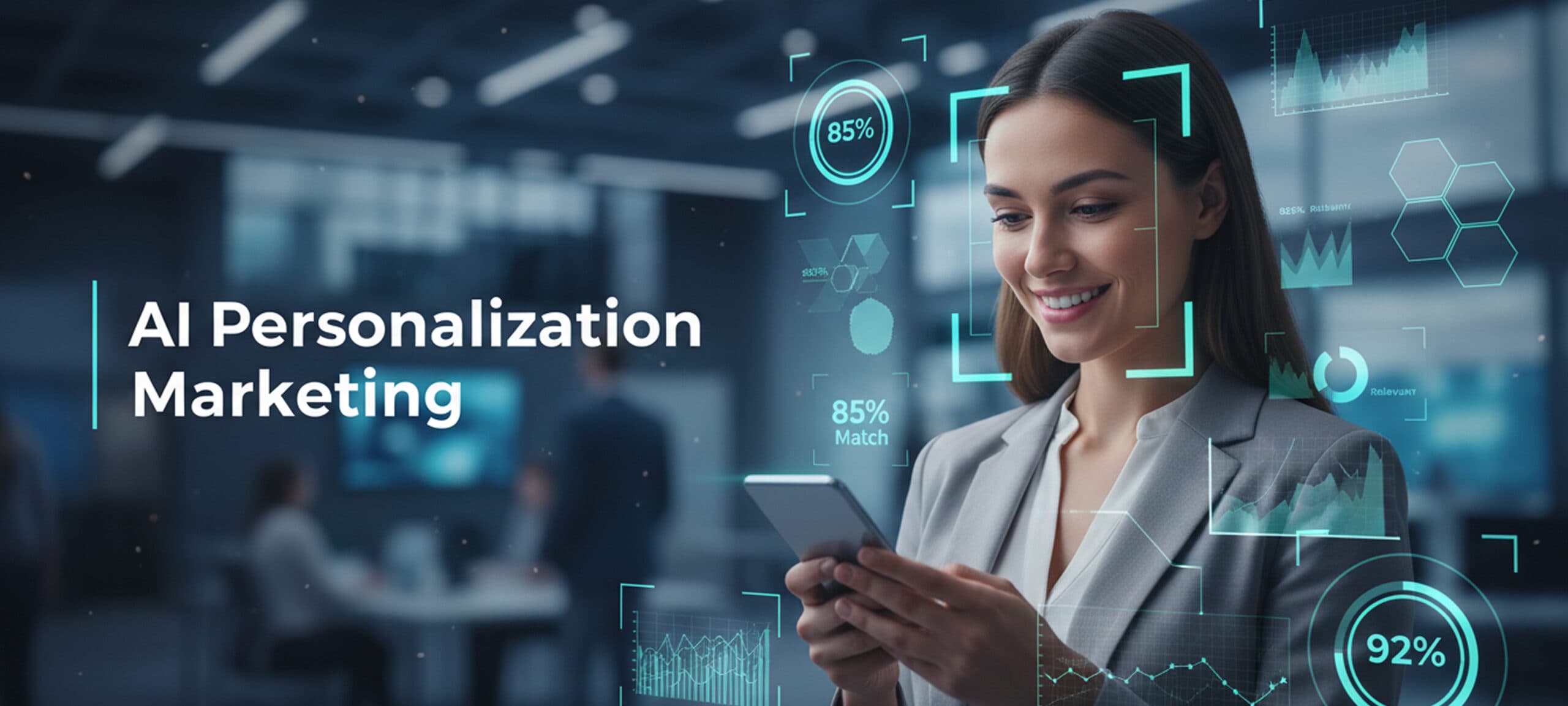
AI personalization marketing uses artificial intelligence to analyze customer data and create individualized experiences across ads, emails, websites, and content. Instead of blasting the same message to everyone, you deliver tailored interactions that match each person’s preferences, behaviors, and needs.
The results speak volumes. Companies using AI personalization marketing report 40% more revenue than slower-growing competitors. Customer engagement rates double. Conversion rates jump 1.7 times higher. And 72% of consumers now expect personalized experiences, they won’t engage with generic messaging.
What Makes AI Personalization Marketing Different
Traditional personalization uses basic segmentation—grouping customers by age or location. AI personalization marketing goes deeper, analyzing individual behavior patterns and predicting what each person wants next in real-time.
The technology processes browsing history, purchase patterns, social interactions, and device usage to create unique experiences.
- Data collection unifies information from all touchpoints into individual profiles.
- Machine learning models identify patterns and predict behavior.
- Automated delivery executes personalized experiences at scale without manual intervention.
The Business Case: Why AI Personalization Marketing Matters
Generic marketing is dying. Consumers delete impersonal emails, skip irrelevant ads, and bounce from websites that don’t meet expectations.
McKinsey research shows personalization can reduce customer acquisition costs by 50%, increase revenues by 5-15%, and boost marketing ROI by 10-30%. Organizations implementing AI personalization marketing achieve 22% higher ROI.
Key statistics: 92% of businesses use AI-driven personalization, 76% of consumers prefer brands that personalize, 62% lose loyalty without personalization, and 95% of customer interactions will be AI-powered by 2025.
The real driver is customer expectation. People experience Netflix recommendations and Amazon suggestions daily. They expect the same from every brand.
Real-World AI Personalization Marketing Examples
Starbucks Deep Brew
Starbucks uses AI personalization marketing to serve 27.6 million loyalty members. The system analyzes purchase history, location, time of day, and weather to generate personalized offers. Morning coffee recommendations shift to iced drinks in the afternoon. Result: 34% increase in member spending.
Netflix Content Curation
Netflix delivers a different homepage to every subscriber. AI analyzes viewing history and behavior to recommend shows. It creates personalized thumbnails and custom category labels. This AI personalization marketing drives 80% of content watched on the platform.
Amazon Recommendation Engine
Amazon’s recommendations generate 35% of total sales. The AI analyzes browsing patterns, purchase history, and similar customer behavior. The system adapts based on real-time context—seasonal trends, inventory levels, trending products.
Nike Mobile App
Nike’s app generates 30% of revenue through AI personalization marketing. The platform offers real-time product visualizations, customization suggestions, and size recommendations based on previous purchases.
How AI Personalization Marketing Works Across Channels
Email Marketing
AI transforms email from batch-and-blast to individual conversations. The technology determines optimal send times, generates personalized subject lines, customizes content, and creates unique product recommendations. Companies report 41% higher email revenue and 18-25% better engagement rates.
Website Personalization
Your website adapts to each visitor. AI modifies homepage layouts, adjusts product displays, changes calls-to-action, and highlights content based on behavior. First-time visitors see introductory content. Returning customers see personalized recommendations.
Advertising and Retargeting
Dynamic creative optimization delivers ads that change based on the viewer. Headlines, images, and offers adapt to match each person’s profile. The technology analyzes performance in real-time, shifting budget toward high-performing variations. Results: 47% higher click-through rates and 25% lift in ROI.
Social Media Engagement
AI curates social feeds, automates responses, identifies trending topics, and personalizes messaging. The technology analyzes sentiment, routing complex issues to humans while handling routine questions automatically.
Implementing AI Personalization Marketing: A Practical Roadmap
Build Your Data Foundation
AI personalization marketing runs on quality data. Implement a customer data platform that unifies information from all sources—website analytics, CRM, email platform, e-commerce system. Track behavioral data comprehensively: clicks, scrolling patterns, time on page, video views.
Choose the Right Technology
Select platforms matching your technical capabilities. Low-code solutions work for teams without development resources. Look for pre-built integrations with existing tools. Prioritize solutions offering transparent AI.
Start With High-Impact Use Cases
Focus on channels delivering the greatest return. Email provides the easiest starting point—implement personalized subject lines, send-time optimization, and dynamic recommendations. Website personalization follows. Advertising comes next.
Test, Measure, Refine
Run A/B tests comparing personalized experiences to generic versions. Track conversion rates, engagement metrics, revenue per customer. Monitor performance weekly, adjusting strategies based on results.
Advanced Strategies: Hyper-Personalization
Hyper-personalization creates one-to-one experiences at scale. The technology combines real-time data, predictive analytics, behavioral triggers, and contextual factors like location, device, weather, and time of day.
Examples include dynamic pricing based on browsing behavior, personalized bundles combining likely products, and behavior-triggered messaging. Organizations implementing hyper-personalization report 10-30% higher conversion rates and up to 800% ROI.
Navigating Privacy and Ethics
AI personalization marketing requires careful privacy management. Clearly communicate what data you collect and how you use it. Provide straightforward privacy policies. Give customers control through easy opt-in and opt-out mechanisms.
Follow regulations like GDPR and CCPA. Obtain proper consent before collecting data. Implement strong security measures protecting customer data from breaches.
Avoid invasive personalization. Don’t reference information customers wouldn’t expect you to have. 90% of consumers willingly share data for personalized experiences, but they expect transparency and value in return.
Common Challenges and Solutions
Data silos prevent unified customer views. Solution: Implement a customer data platform integrating all sources with real-time data flow.
Limited AI expertise slows implementation. Solution: Start with user-friendly platforms. Partner with specialists for complex implementations.
Generic content at scale undermines quality. Solution: Use generative AI to create variations tailored to different segments 50 times faster than manual approaches.
Privacy concerns damage trust. Solution: Lead with transparency, obtain explicit consent, and demonstrate clear value exchange.
The Future of AI Personalization Marketing
Agentic AI represents the next evolution. Unlike reactive systems, agentic AI proactively initiates actions, anticipates needs before customers express them, and optimizes entire customer journeys autonomously.
Agent-to-agent commerce will change competition. AI shopping assistants will make purchase decisions for consumers, comparing products and executing transactions. Marketing shifts from persuading people to optimizing for algorithms.
Voice and visual search integration expands personalization surfaces. AI personalizes voice responses and modifies visual results based on preferences.
The AI-based personalization market will reach $2.71 billion by 2029, growing at 17.5% annually.
Making AI Personalization Marketing Work for Your Business
Identify your highest-value customer touchpoints. Where do people engage most? Focus there first. Leverage existing customer data, even if incomplete. Basic purchase history enables meaningful personalization.
Choose accessible technology. Modern platforms offer powerful capabilities without requiring data science teams. Measure what matters: revenue lift, conversion improvement, engagement growth, customer retention.
For businesses ready to transform customer engagement, Isometrik AI‘s personalization platform combines advanced machine learning with intuitive interfaces, enabling hyper-personalized experiences without extensive technical expertise.
Take Action on AI Personalization Marketing
Generic marketing won’t win in 2026. Customers expect personalization across every interaction. Brands that deliver it capture market share and drive revenue growth.
Begin today. Pick one channel, implement basic personalization with Isometrik AI, measure results, and expand. The competitive advantages compound, early movers build momentum that’s difficult to overcome.