AI Product Development Cost: A Practical Guide for US Businesses in 2026

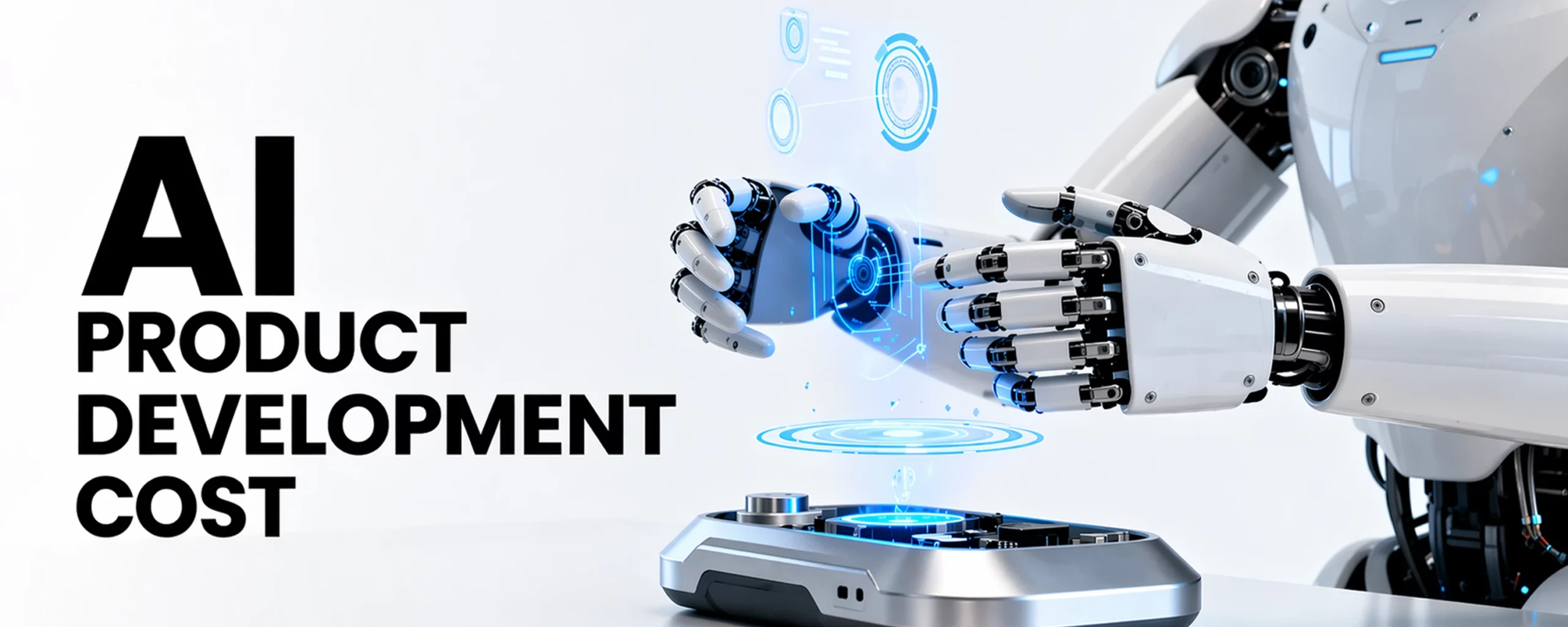
AI product development cost is a top concern for US business leaders eyeing AI to streamline operations. In 2026, with AI adoption surging in sectors like sales, recruitment, and customer service, understanding these costs helps founders and CTOs make informed decisions.
Mid-market companies, often with revenues from $10M to $500M, face pressures to automate manual workflows without breaking budgets. This guide breaks down the essentials, from pricing factors to ROI strategies, so you can evaluate options that deliver real value.
The key is aligning spend with business outcomes, like faster hiring cycles or reduced support tickets. By focusing on production-ready solutions, US firms can avoid common pitfalls like endless pilots or vendor lock-in.
Factors Influencing AI Product Development Cost
Several elements drive AI product development cost, making it essential to assess your project’s specifics early. Project complexity tops the list — simple rule-based bots cost less than advanced machine learning models that learn from data.
Team expertise plays a big role too. In the US, AI developers charge $100 to $250 per hour, higher in tech hubs like San Francisco. Offshore teams can cut this by 40–60%, but quality and compliance risks rise. Data needs add another layer: sourcing and cleaning data for training models can eat 20–30% of the budget.
Integrations with existing tools, such as CRMs like Salesforce or ATS platforms, increase costs by 15–25%. Security and compliance, vital for industries like banking or healthcare, add $10,000–$50,000 for audits and features.
Here’s a quick breakdown of major factors:
- Scope and Features: Basic vs. advanced AI (e.g., natural language processing).
- Timeline: Rushed projects inflate costs by 20–50% due to overtime.
- Scalability: Cloud hosting on AWS or Azure starts at $500/month but scales with usage.
- Maintenance: Ongoing support accounts for 15–20% annually post-launch.
By prioritizing must-have features, you control AI product development cost without sacrificing effectiveness.
Cost Breakdown by AI Product Type
AI products span chatbots, workflow automations, and agent systems. Costs differ based on type, with US mid-market projects often in the $50,000–$200,000 range.
Consider these benchmarks from recent implementations:
| AI Product Type | Description | Estimated Cost Range | Timeline | Typical Use Case |
| Basic Chatbot | Rule-based responses for customer queries | $20,000–$50,000 | 4–8 weeks | E-commerce support, reducing ticket volume by 30% |
| Custom AI Agent | Single-agent for tasks like lead qualification | $50,000–$150,000 | 8–12 weeks | Sales teams automating prospect research |
| Multi-Agent System | Collaborative agents for complex workflows | $150,000–$500,000+ | 12–24 weeks | Recruitment matching candidates to roles across ATS |
| Workflow Automation | Integrates AI with ERP/CRM for ops efficiency | $30,000–$100,000 | 6–10 weeks | Logistics optimizing supply chain decisions |
These figures include design, development, testing, and initial deployment. For recruitment-focused AI, costs lean toward the mid-range due to data privacy needs. Sales agents might add $10,000–$20,000 for real-time integrations.
Build vs. Buy: Analyzing AI Product Development Cost Trade-Offs
Deciding to build or buy an AI product hinges on cost, control, and speed. Building custom solutions gives full ownership but demands higher upfront investment.
Custom builds average $100,000–$300,000 for mid-market needs, covering tailored features like voice bots for customer engagement. Benefits include scalability and no subscription fees long-term. However, development takes 3–6 months, with risks of scope creep adding 20% to costs.
Buying off-the-shelf tools, like pre-built AI platforms, starts at $5,000–$50,000 plus $1,000–$5,000 monthly. This suits quick wins, such as SaaS integrations for banking compliance. Drawbacks: limited customization and potential vendor lock-in, raising total ownership costs over 2–3 years.
| Aspect | Build Custom | Buy Off-the-Shelf |
| Initial Cost | $100K–$300K | $5K–$50K |
| Ongoing Costs | 10–15% annual maintenance | $12K–$60K/year subscriptions |
| Customization | High (fits exact workflows) | Medium (add-ons available) |
| Time to Launch | 3–6 months | 2–8 weeks |
| ROI Potential | Higher long-term (e.g., 3x efficiency) | Faster but capped (1.5–2x) |
| Best For | Enterprise ops with unique needs | SMBs testing AI in sales/recruitment |
For US operations heads, buying works for pilots, while CTOs favor building for strategic AI in logistics or legal. Hybrid approaches, like customizing bought tools, balance costs at 60–70% of full builds.
Calculating ROI from AI Product Investments
AI product development cost pays off when tied to measurable outcomes. US businesses see ROI through reduced manual work and faster processes.
Expect payback in 12–18 months for well-scoped projects. For sales AI, automating lead scoring cuts cost per lead by 30–50%, from $200 to $100. Recruitment tools shorten time-to-hire from 45 to 25 days, saving $5,000–$10,000 per role.
Key metrics to track:
- Efficiency Gains: 40–60% reduction in routine tasks.
- Cost Savings: 20–40% lower operational expenses.
- Revenue Impact: 15–25% uplift in qualified leads or customer retention.
- Scalability: Handle 2–5x volume without added headcount.
In healthcare, AI triage bots reduce support costs by $50,000 yearly. Factor in indirect benefits like better employee satisfaction.
To maximize ROI, budget 10% for training and change management. Tools like dashboards for monitoring ensure ongoing value.
Real-World Scenarios: AI Costs in Key Business Functions
US mid-market firms apply AI differently across functions, with costs reflecting priorities.
In sales, a growth head deploys AI agents for prospecting. A $80,000 project integrates with CRM to automate research, boosting reply rates from 5% to 15%. Timeline: 10 weeks, with ROI in 9 months via 20% pipeline growth.
Recruitment leaders build matching systems for $120,000, screening resumes via ATS. This cuts recruiter time by 50%, handling 1,000+ applications monthly. Deployment in 12 weeks yields $150,000 annual savings.
For operations, customer experience teams invest $60,000 in voice bots for e-commerce. It manages high-volume queries, dropping resolution time from 10 to 3 minutes. Quick 6-week rollout delivers 35% cost reduction.
Logistics managers use AI for route optimization at $150,000, integrating with ERP. This saves 25% on fuel, with full implementation in 14 weeks.
These examples show AI product development cost as an investment, not an expense. Partners experienced in US compliance speed delivery.
Strategies to Optimize and Reduce AI Product Development Cost
Control AI product development cost with smart planning. Begin with clear goals — define KPIs like lead volume to avoid overbuilding.
Leverage open-source tools like TensorFlow to trim 20–30% off development. Cloud credits from providers cut hosting by $5,000–$10,000 initially.
Outsource non-core tasks to US-based firms for quality assurance. Phased rollouts spread costs over 6–12 months.
Common pitfalls: underestimating data prep (add 15% buffer) or skipping testing (leads to 10–20% rework).
Final tips:
- Conduct audits of current tools for reuse.
- Negotiate fixed-price contracts with milestones.
- Monitor post-launch with analytics for adjustments.
By following these steps, mid-market teams deploy AI affordably, achieving outcomes in sales, hiring, and ops.
In summary, AI product development cost ranges from $20,000 to $500,000, but strategic choices ensure strong ROI. US businesses gain by focusing on custom agents that automate workflows efficiently.
Platforms like Isometrik AI help organizations deploy production-ready AI agents without long development cycles. Their expertise in custom workflows for sales, recruitment, and operations ensures costs align with quick, tangible results for US mid-market teams.