Understanding Owned AI vs Third Party AI


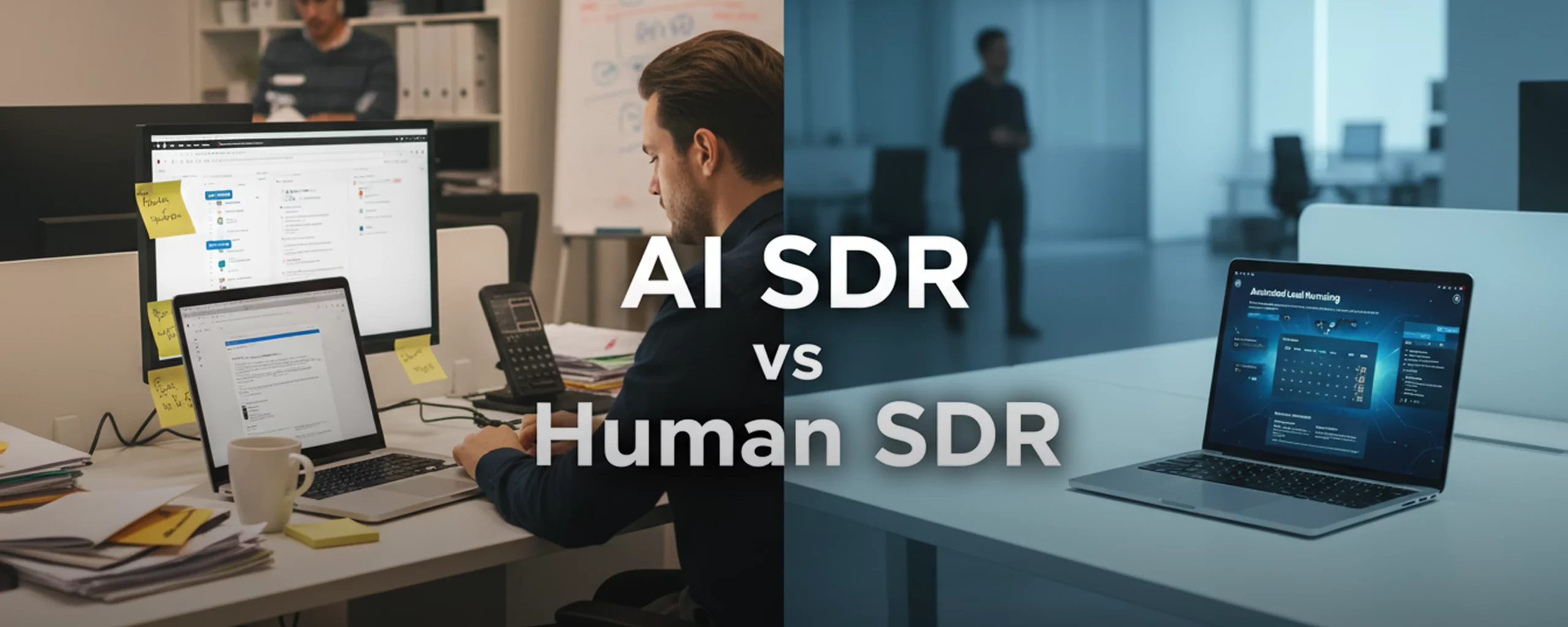
Business leaders in the US face a pivotal choice in AI adoption: build systems they fully own or rely on third-party providers. Owned AI refers to custom-developed or self-hosted solutions where your organization controls the code, data, and infrastructure.
This understanding of owned AI vs third party AI approach suits enterprises needing tailored automation, like integrating AI agents with existing CRM tools for sales pipelines.
Third-party AI, on the other hand, involves off-the-shelf platforms from vendors like cloud-based chatbots or SaaS tools. These are easier to adopt, especially for mid-market companies with 50-500 employees looking to automate recruitment screening without heavy IT involvement. The decision hinges on balancing speed with strategic control.
For operations leaders, owned AI optimizes logistics workflows end-to-end, while third-party AI handles routine customer tickets. Both deliver value, but owned AI positions your business for long-term innovation.
Implementation takeaway: Assess your tech maturity. If your team uses ATS or ERP systems comfortably, owned AI amplifies them. Start with a pilot to test fit.
Key Differences in Control and Customization for Owned AI vs Third Party AI
Control defines the core divide between owned AI and third-party AI. With owned AI, you dictate every aspect — from model training to updates — ensuring alignment with business goals. This is crucial for CTOs avoiding vendor lock-in, especially in regulated sectors like healthcare or finance.
Third-party AI offers limited control. Vendors manage the backend, which speeds setup but restricts tweaks. For instance, a generic chatbot might not integrate seamlessly with your custom sales dashboard.
Customization follows suit. Owned AI allows fine-tuning for unique scenarios, like a multi-agent system for e-commerce order fulfillment that learns from your data patterns. Third-party solutions provide templates, but adapting them often incurs extra fees or compromises.
| Aspect | Owned AI | Third-Party AI |
| Control Level | Full (code, data, infrastructure) | Limited (vendor-managed) |
| Customization | High (tailored to workflows) | Medium (pre-built with add-ons) |
| Integration Depth | Deep (e.g., CRM/ATS native) | Surface-level (API-based) |
| Update Frequency | On-demand, internal | Vendor-scheduled |
In practice, a product leader at a logistics firm might use owned AI to customize route optimization, cutting costs by 15-25%. Third-party AI could suffice for basic tracking but falters in complex supply chains.
- Data Ownership: Owned AI keeps sensitive info in-house, vital for US privacy laws like CCPA.
- Scalability: Third-party scales via subscriptions, but owned AI grows with your infrastructure.
- Innovation Speed: Owned AI fosters internal R&D; third-party leverages vendor advancements.
Takeaway: Prioritize owned AI if customization drives competitive edge. For quick automation in customer engagement, third-party wins.
Cost Implications: Build vs. Buy Decisions
Costs vary widely between owned AI and third-party AI, influencing ROI for operations heads under budget pressure. Third-party AI boasts low entry barriers — monthly fees from $5,000 to $50,000 for mid-market use, covering maintenance and updates. This “buy” model avoids hiring developers, appealing to firms with $10M-$100M revenue.
Owned AI follows a “build” path with upfront investments of $50,000-$300,000, including development and hardware. Ongoing costs drop to 10-20% annually for support, yielding savings over 2-3 years through efficiency gains.
Break-even analysis shows owned AI surpassing third-party ROI at scale. For a 500-employee company automating sales, third-party might cost $100K/year in subscriptions plus integration fees. Owned AI, at $200K initial, could save $150K yearly via custom optimizations.
| Cost Category | Owned AI (First Year) | Third-Party AI (First Year) |
| Development/Setup | $100K-$250K | $10K-$50K (implementation) |
| Ongoing (Annual) | $20K-$50K (maintenance) | $50K-$150K (subscriptions) |
| Hidden Fees | Internal training ($10K) | Usage overages, API calls ($20K+) |
| Total 3-Year Cost | $200K-$400K (with ROI) | $150K-$500K (scaling up) |
ROI examples: In recruitment, owned AI reduces hiring costs by 40% long-term; third-party cuts screening time but adds per-user fees. For banking, owned AI avoids third party data-sharing premiums.
Takeaway: Calculate TCO over 3 years. Third-party fits pilots; owned AI suits committed deployments showing 2-5x ROI in sales or ops.
Implementation Timelines and Scalability
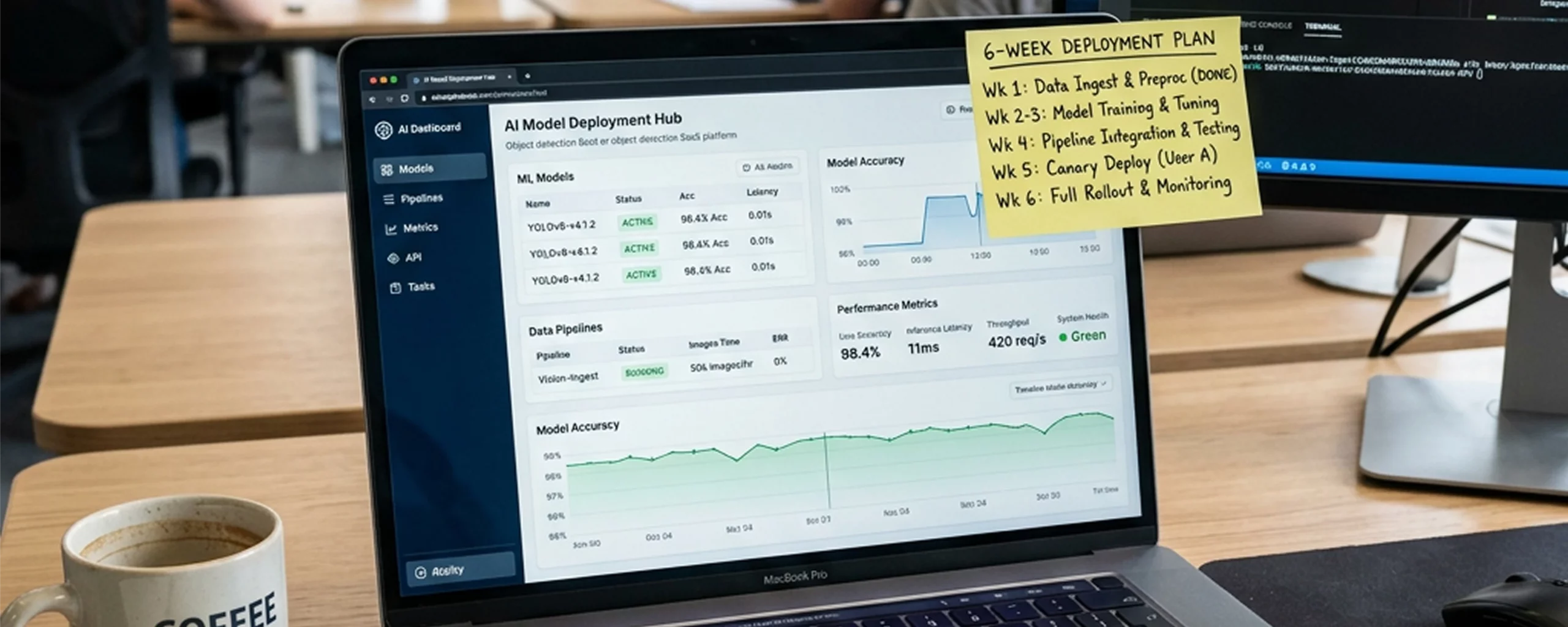
Deployment speed is a deciding factor in owned AI vs. third-party AI. Third-party solutions roll out in 2-8 weeks, ideal for urgent needs like boosting customer response times. Vendors handle setup, minimizing disruption for stretched teams.
Owned AI timelines stretch to 1-6 months, involving design, testing, and integration. This delay pays off in scalability — systems expand without vendor limits, supporting growth from 50 to 5,000 employees.
For a CTO leading digital transformation, owned AI integrates with ERP for seamless ops, scaling to handle 10x volume. Third-party might cap at enterprise tiers, requiring migrations.
Realistic scenarios:
- Sales Automation: Third-party chatbot live in a month, qualifying leads 20% faster. Owned AI, after 3 months, personalizes outreach, lifting conversion by 35%.
- Recruitment Workflow: Third-party screens 1,000 resumes weekly out-of-box. Owned AI, post-4 months, matches candidates to roles with 90% accuracy, shortening cycles.
Scalability pros:
- Owned AI: Handles custom loads, like peak e-commerce traffic.
- Third-party: Auto-scales but at premium costs.
Takeaway: Use third-party for fast MVPs; invest in owned AI for scalable, future-proof systems. Timelines shorten with partners experienced in US enterprise integrations.
Security, Compliance, and Risk Management
Security tops concerns for US businesses comparing owned AI and third-party AI. Owned AI shines here — data stays on-premises or in controlled clouds, complying with HIPAA or GDPR without third-party access. This reduces breach risks, critical for legal or healthcare firms.
Third-party AI introduces dependencies. While vendors offer SOC 2 compliance, data flows through their systems, raising exposure. Vendor outages or policy changes can disrupt operations.
Risks breakdown:
- Owned AI Risks: Internal misconfigurations; mitigated by audits (cost: $10K/year).
- Third-Party Risks: Lock-in (switching costs 20-50% of annual fees); data leaks from shared infrastructure.
In banking, owned AI ensures secure transaction bots; third-party might require anonymization, slowing insights.
| Factor | Owned AI | Third-Party AI |
| Data Privacy | Full control (CCPA compliant) | Vendor-dependent (shared risks) |
| Breach Likelihood | Low (internal) | Medium (multi-tenant) |
| Audit Ease | High (transparent) | Medium (vendor reports) |
| Recovery Time | 1-2 days (in-house) | 3-7 days (vendor SLA) |
Example: A customer experience team using owned AI for voice bots avoids third-party eavesdropping, building trust.
Takeaway: For high-stakes industries, owned AI minimizes risks. Vet third-party providers rigorously with SLAs.
Real-World Examples and Decision Frameworks
Enterprises thrive by matching owned AI or third-party AI to pain points. A $100M SaaS company built owned AI agents for lead nurturing, integrating with their CRM to increase pipeline velocity by 40% in 6 months. Initial $150K investment yielded $500K annual revenue lift.
Contrast with a mid-market logistics firm opting for third-party AI. They deployed a vendor chatbot in 4 weeks, handling 70% of inquiries and cutting support costs by 25%. However, scaling to custom routing required add-ons, hiking fees.
Decision framework:
- Evaluate needs: Quick wins? Go third-party.
- Assess resources: Strong IT? Build owned.
- Project ROI: Use benchmarks — owned AI often hits 3x payback in year 2.
- Hybrid option: Start third-party, migrate to owned for control.
In recruitment, owned AI reduced a firm’s time-to-hire from 45 to 15 days; third-party handled basics but missed cultural fits.
Takeaway: Pilot both. For US firms under growth pressure, owned AI aligns with ownership trends, delivering sustained value.
Making the Right Choice for Your Business
Weighing owned AI against third-party AI boils down to strategy. If your firm prioritizes agility and low risk in early stages, third-party provides a solid entry. For deeper integration and control — especially in sales, recruitment, or operations — owned AI unlocks transformative ROI.
Trends show US enterprises shifting to owned models for 20-30% better efficiency. Factor in your revenue scale and tech stack. The goal: AI that scales with business, not against it.
Isometrik AI can help you decide which AI implementation will be better for you.